What Exactly is Kerf? Why This Tiny Laser Cutting Detail Can Make or Break Your Metal Parts
In our world, millimetres are miles. When manufacturing metal parts, the smallest details always determine whether a project succeeds or fails. One of the most critical—yet often overlooked—factors is “kerf.”
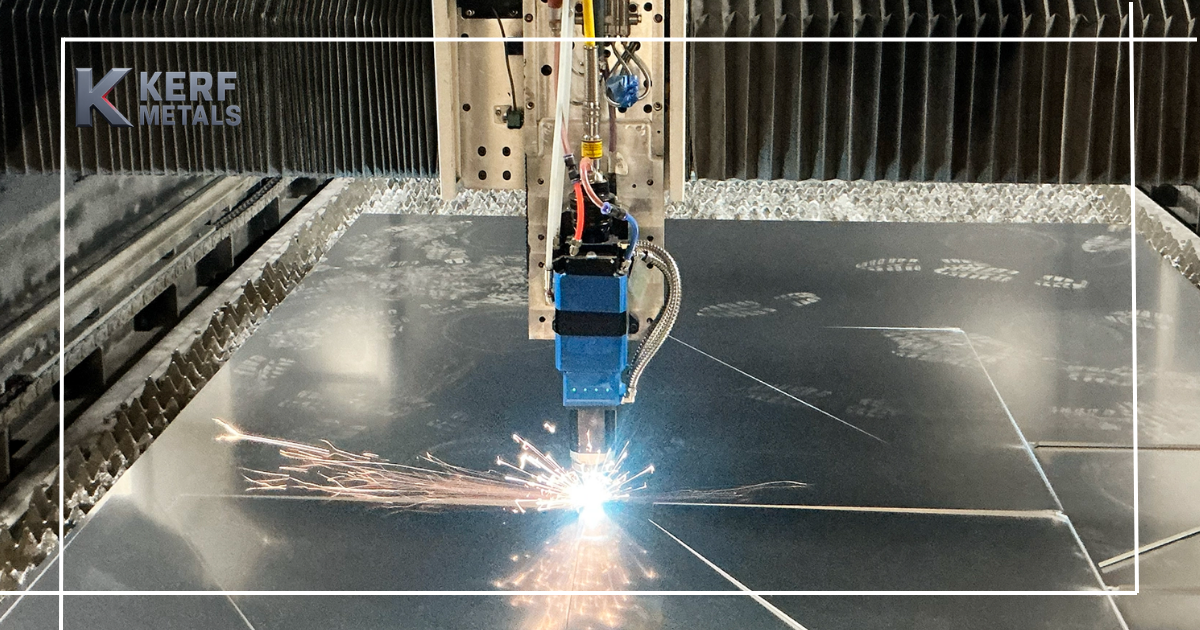
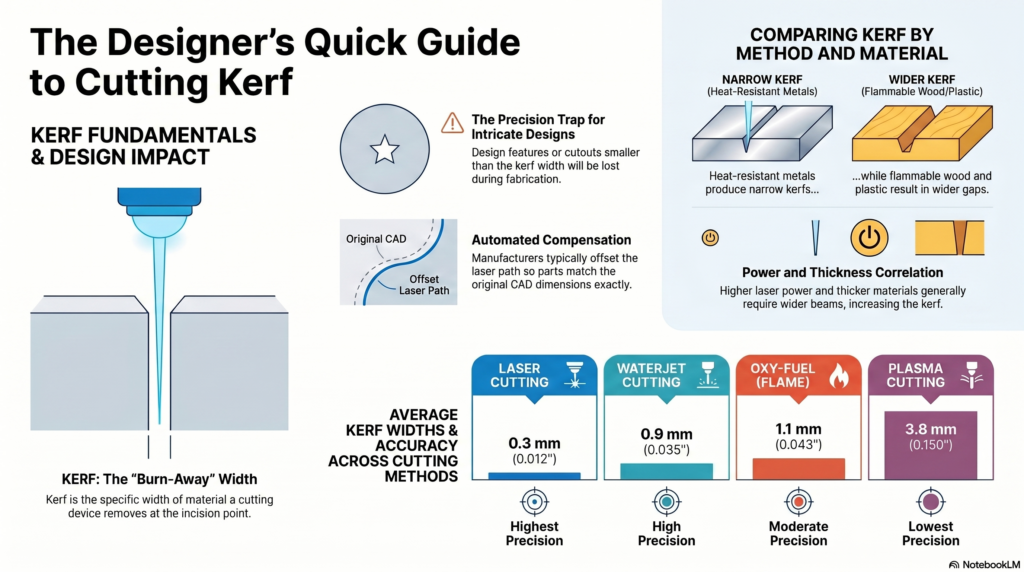
Simply put, kerf is the tiny sliver of metal that is vaporised or lost when the laser does its work.
Think of it like using a hand saw on a piece of wood. You don’t just get a clean split; you also get sawdust, and the board gets slightly shorter due to the blade’s width. Laser beams work the same way. When a laser cuts through steel, stainless steel, or aluminium, it doesn’t create a magical, zero-width line. It burns away a tiny sliver of metal as it moves. That missing sliver is your kerf.
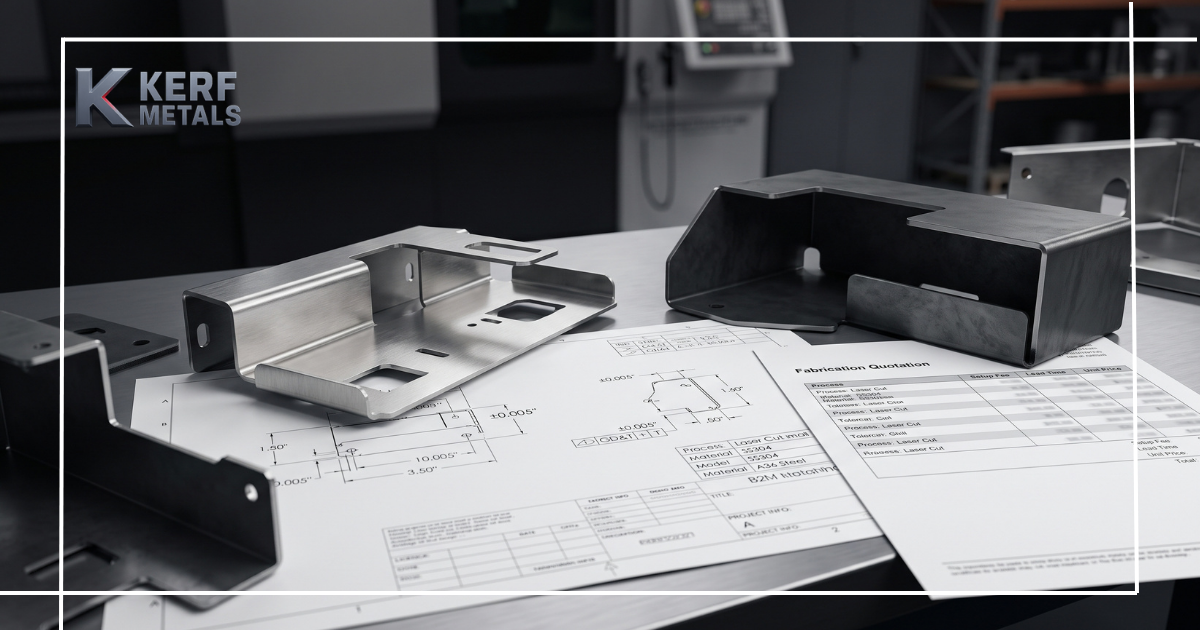
If you are just cutting basic shapes where “close enough” is fine, you might not need to worry about it. But if you are manufacturing high-tolerance brackets, panels, machine parts, or enclosures, kerf is everything. Ignore it, and your finished parts will turn out too small, your bolt holes will be too sloppy, and mating components won’t line up.
At Kerf Metals, precision isn’t just a marketing word—it is built into our setup. We design our laser cutting services to give you clean edges and dead-on dimensions right from the very first cut
Why Kerf Matters So Much on the Shop Floor
Laser cutting is famous for being fast, incredibly clean, and highly accurate. Because a laser beam is so narrow, the kerf is much smaller than what you’d get from a plasma cutter or a mechanical saw. But “small” doesn’t mean “zero.”
Let’s look at the math of a real-world cut.
If you draw a part with a specific outer dimension, the laser path must be slightly pushed outward. If it isn’t, the laser will eat into your actual part, leaving it undersized. The opposite is true for internal features like slots, holes, and cutouts. If you want a $10\text{ mm}$ bolt hole, the laser needs to cut slightly inside that line, or the hole will come out too large.
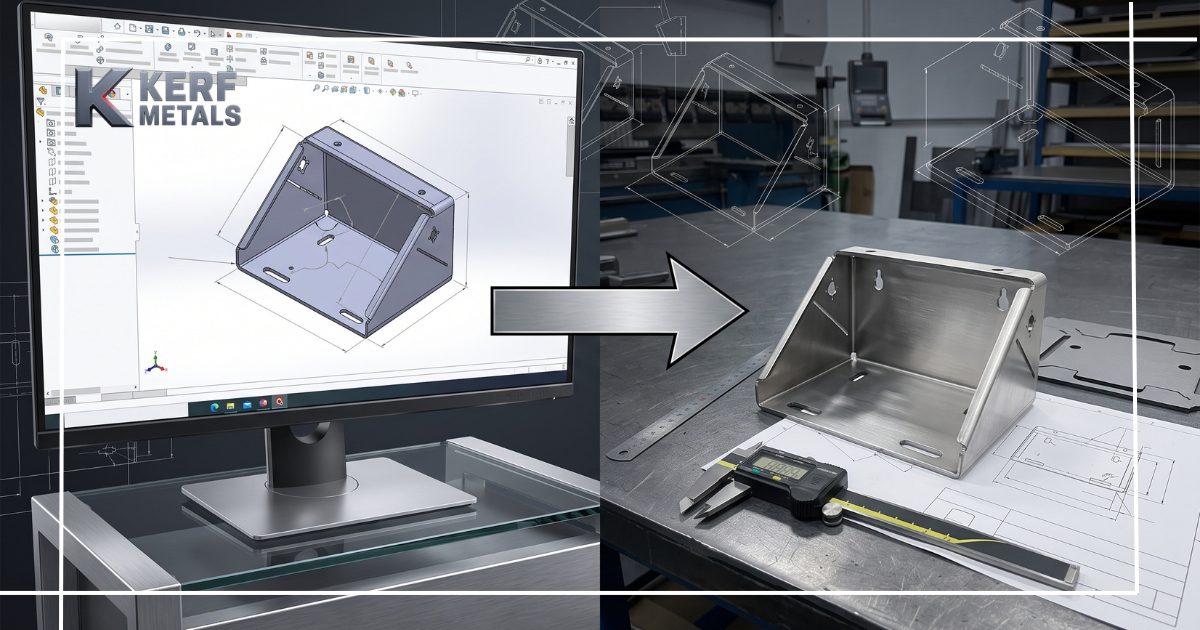
This is where real-world experience comes into play. Correcting the laser path, called the kerf offset, ensures the part matches the exact size in your CAD drawing.
What Actually Determines Kerf Width?
Kerf is never a fixed, one-size-fits-all number. It is constantly changing based on the specifics of the job. A few major factors include:
- Material type and thickness: Thicker plates require more heat, which generally widens the cut.
- Laser power and beam focus: How tight and intense is the focal point?
- Assist gases: Whether we are using oxygen or nitrogen affects how the metal melts and clears out.
- Cutting speed and machine calibration: How fast the head travels alters the dwell time of the heat.
Different metals behave in wildly different ways under a laser. Carbon steel doesn’t melt the same way as aluminium, stainless steel, or brass does. Intricate parts with delicate tabs or narrow bridges require extra care, because heat builds up rapidly in confined areas, which can easily widen the kerf.
We don’t guess these numbers. Getting a perfect cut requires tailoring the machine settings to the exact material and geometry of your part.
How Kerf Compensation Saves Your Project from Rework
To prevent parts from coming out wrong, we use “kerf compensation.” This simply means our programming software adjusts the cutting path to offset the width of the laser beam. Instead of cutting directly on your design line, the laser offsets itself to the waste side of the metal.
This is absolutely vital for parts that have to fit together. If you make mounting plates, tabs, slots, or interlocking brackets, even a small error can prevent assembly. A $0.1\text{ mm}$ mismatch between features may be enough to stop parts from fitting together. That means wasted material, missed deadlines, and major headaches.
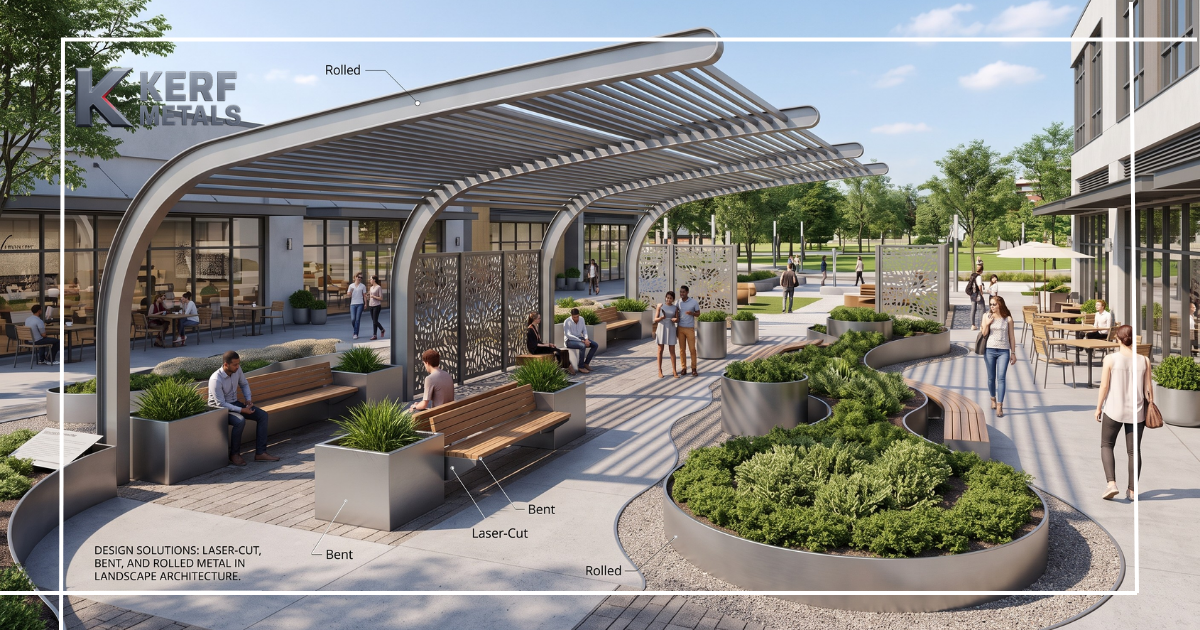
At Kerf Metals, we focus on helping you bypass these headaches. We don’t build finished, fully assembled consumer products. Instead, we serve as your trusted manufacturing partner. We supply precision-cut, bent, and rolled metal parts that fit together perfectly the first time.
Better Cuts, Fewer Headaches
High-quality laser cutting isn’t just about slicing through a sheet of metal. It’s about total control over the process. When you dial in the kerf perfectly, everything else falls into place:
- Your parts are highly accurate.
- Edges are cleaner, with virtually no dross.
- Interlocking pieces actually fit together without grinding.
- There is no wasted material or costly rework.
- Repeat production runs look identical to the first batch.
For anyone in manufacturing, construction, heavy equipment, signage, or architectural metalwork, these small details are what keep projects on schedule and costs under control.
Partner with Kerf Metals for Your Next Project
Kerf Metals provides professional laser cutting, metal bending, and rolling for businesses that need high-quality processing. We work directly with customers who already have drawings, specs, or production files ready. They just need a reliable shop to execute the work accurately.
We don’t try to do everything. We specialise in the core metal processing steps that keep your production line moving.
Whether you need flat-cut sheets, formed brackets, or rolled sections, our team delivers the accuracy your blueprints require.
Ready to get started? Send over your drawings or project specs today, and we’ll get back to you quickly with a straightforward quote.