Why Are Metal Fabrication Quotes All Over the Place?
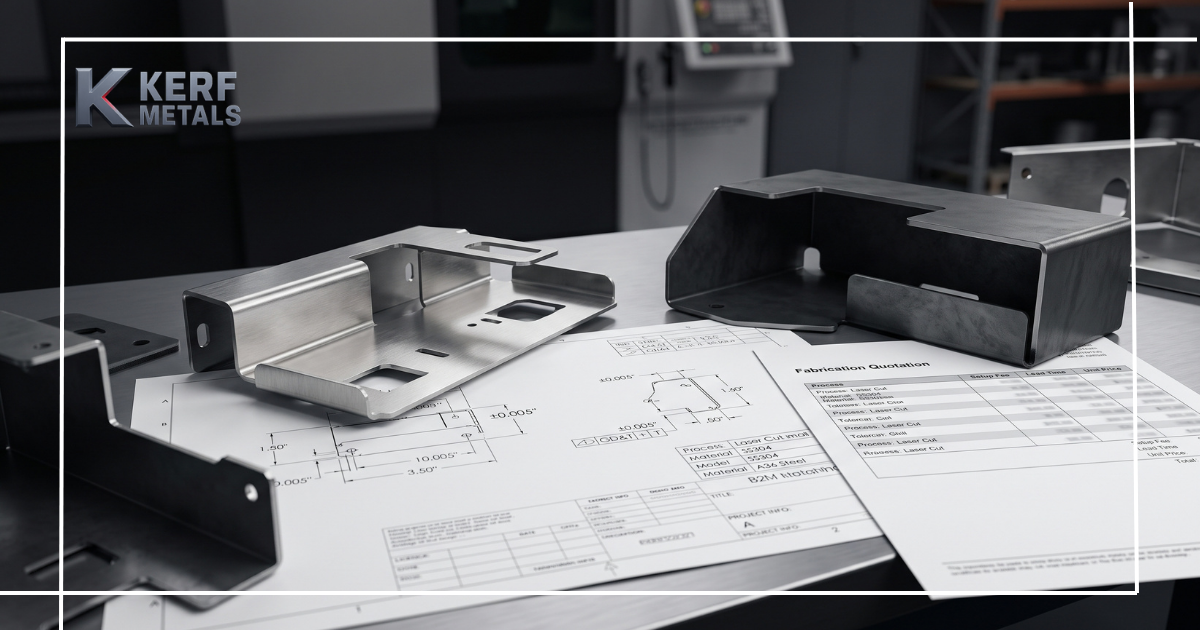
If you’ve ever sent the exact same drawing to three different metal shops and received wildly different quotes, you are definitely not alone. It’s incredibly frustrating.
But there is a method to the madness. These price differences don’t just happen because one shop wants to overcharge you. They happen because estimators look at your design through different lenses—calculating setup times, raw material waste, machine wear, and handling complexity in their own ways.
At Kerf Metals, we live and breathe precision laser cutting, metal bending, and metal rolling. We want to lift the hood and show you exactly what goes into pricing a job, plus how a few small design tweaks on your end can save you serious money before you even hit “submit” on your quote request.
The Anatomy of a Metal Fabrication Quote
When we send over a price, we aren’t just charging you for a raw sheet of steel. A clean, accurate estimate is a puzzle made of several pieces:
- The raw material stock (and how much of it ends up as scrap)
- The actual time the laser head spends cutting and piercing
- The manual setup and handling required at the press brake
- The skill and machinery needed to roll curves
- Tooling constraints and tolerance requirements
- The size of your order
- How clean your CAD files are when we import them
Let’s dive into each of these so you can see where the money actually goes.
1. Material Type: Choose Wisely
Material is almost always the heaviest cost driver.
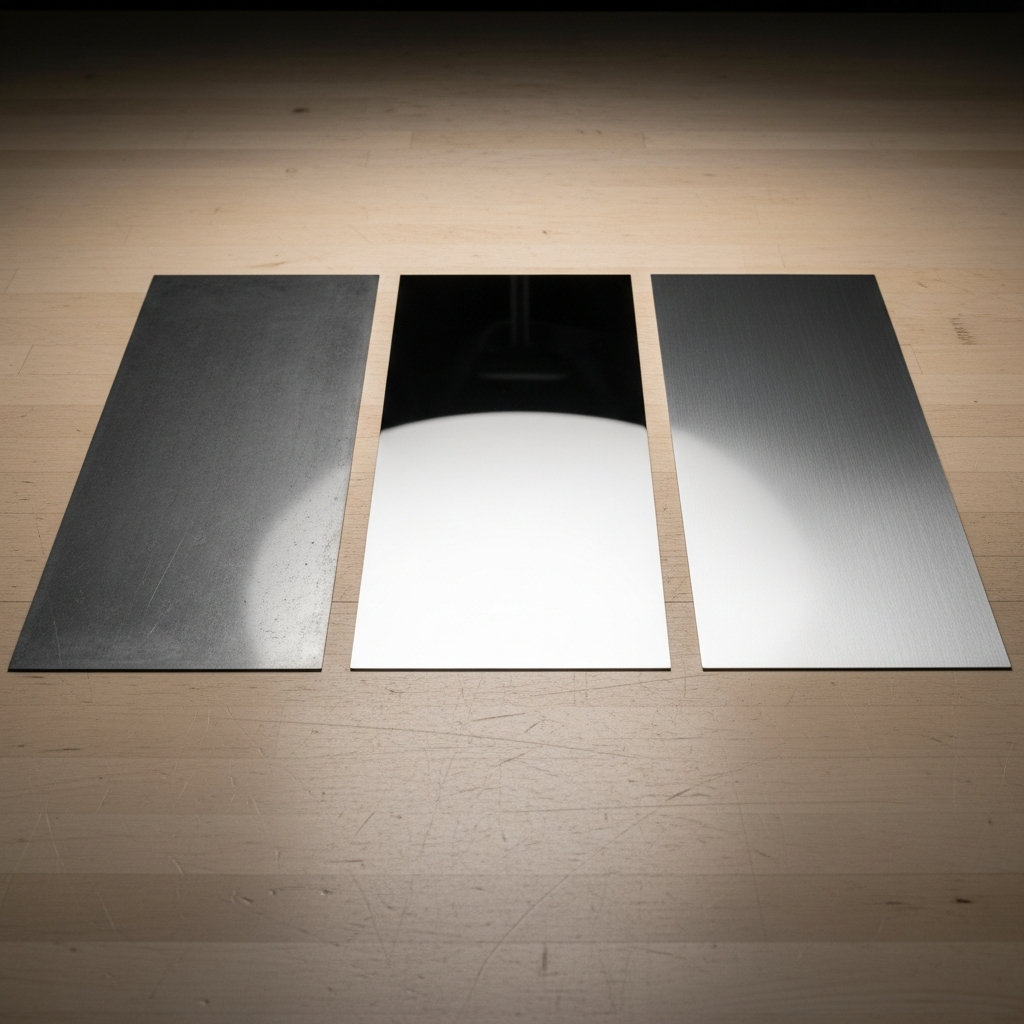
First up is carbon steel. It’s the workhorse of the industry-cost-effective, highly predictable, and easy to work with. If you step up to stainless steel, you’re paying a premium for corrosion resistance and a clean, bare-metal look. Aluminum is incredibly light and corrosion-resistant, but it behaves differently under a laser and a press brake, meaning it sometimes requires extra care and specialized tooling.
The takeaway here? Don’t over-specify. If your parts are going to be powder-coated and will live indoors, stick to standard carbon steel. There’s no need to pay the stainless premium unless the environment demands it
2. Thickness: The Hidden Price Multiplier
Thickness does more than just add weight to your shipping bill-it drastically alters machine run times.
Thin sheet metal cuts incredibly fast. But as the gauge climbs, the laser has to crawl. It uses more power, more assist gas (like oxygen or nitrogen), and takes longer to pierce the initial hole before starting a cut.
Thickness also forces us to use heavier, slower forming equipment. If you can drop down a gauge or two without sacrificing the structural integrity of your assembly, you will see an immediate drop in your unit cost.
3. Laser Cutting: It's All About "Time on the Table"
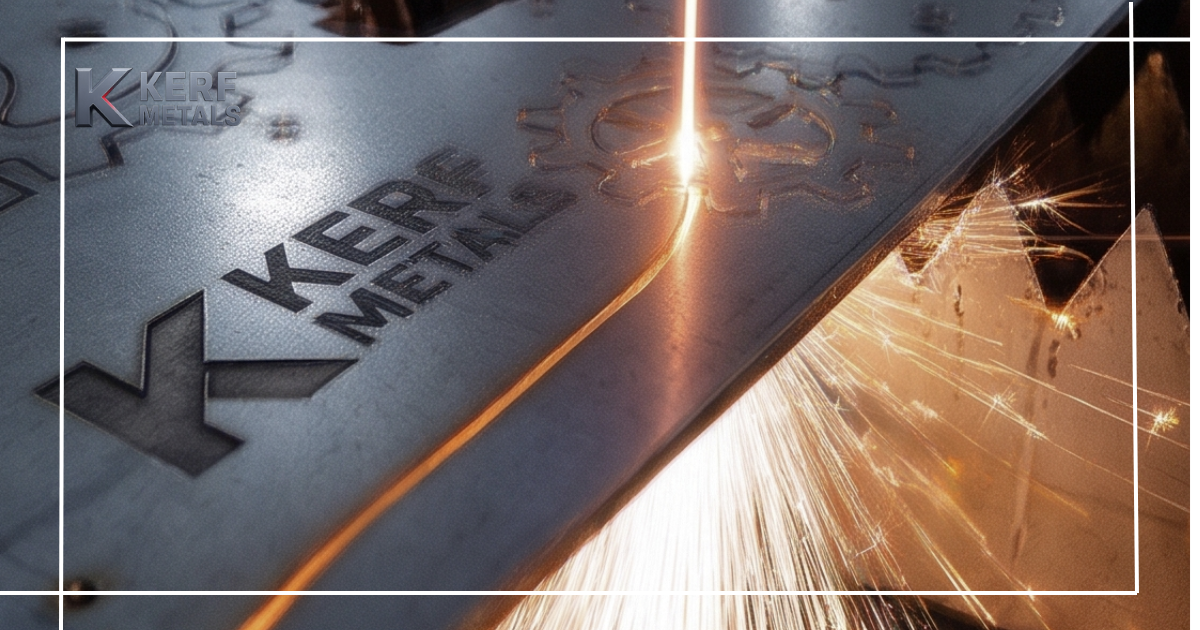
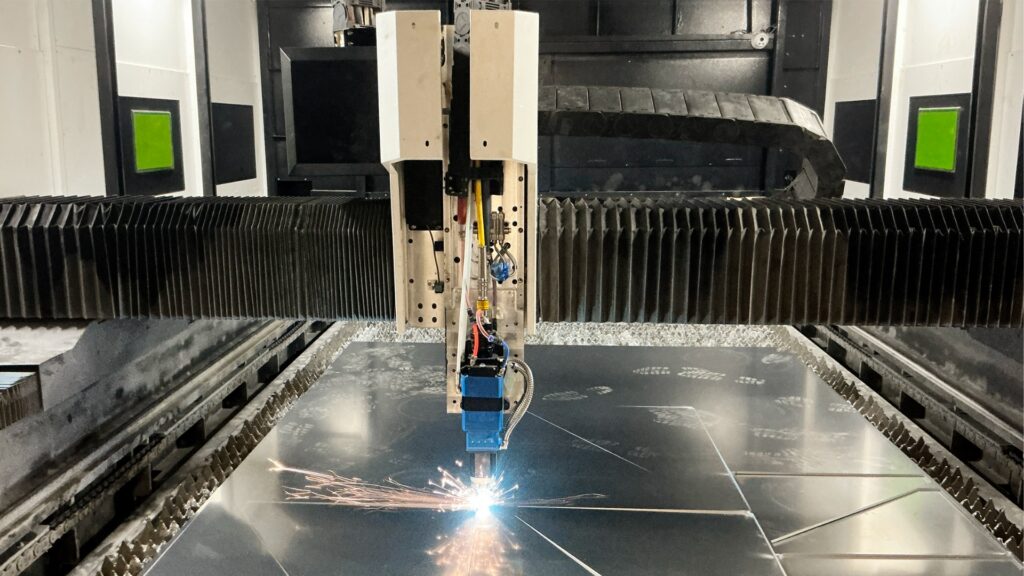
Lasers are fast, but they aren’t magic. We price cutting based on machine runtime, which is driven by two main factors: cut length and piercing.
Every time the laser starts a new cut-like an internal bolt hole-it has to stop, blast a hole through the metal (pierce), and then start moving. If you design a bracket with fifty tiny decorative cutouts, the laser has to pierce fifty times. That takes a lot longer than cutting one continuous outer profile.
If you want to keep cutting costs low, simplify. Remove unnecessary holes or cutouts, and let standard drills handle the tiny holes post-fab if it makes sense for your workflow.
4. Bending: The Press Brake Bottleneck
A common myth is that bending is cheap because it “only takes a second.” The actual bend takes a second; the setup takes much longer.
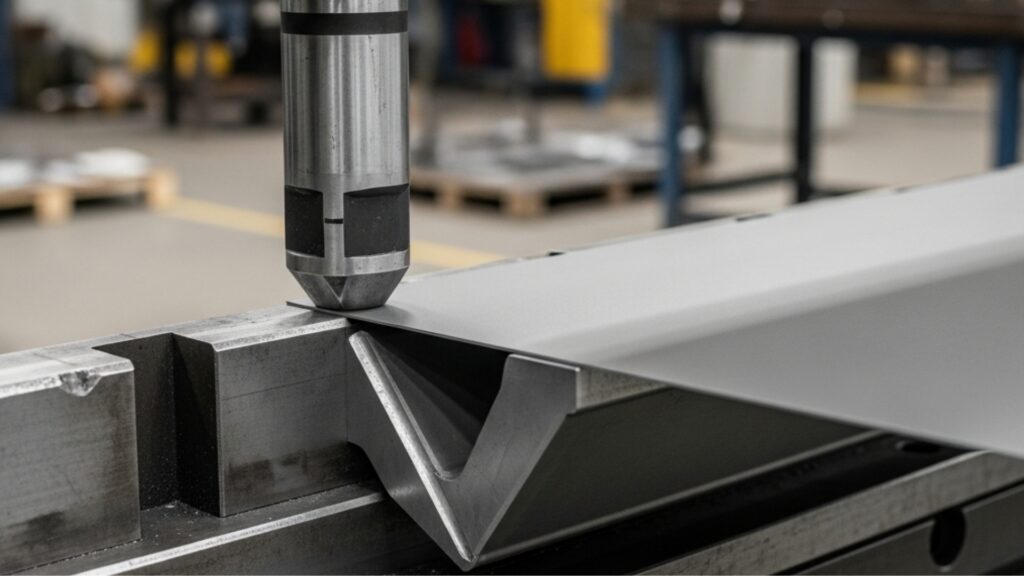
An operator has to select the right upper punch and lower die, load them into the machine, set the backgauges, and run a few test scraps to account for “springback” (how much the metal relaxes after being bent).
If your part has five identical 90-degree bends, that’s incredibly fast. The operator sets up the machine once and knocks out the run. But if your part has five different angles or three different bend radii, that means multiple tool setups.
Pro Tip: Standardize your bends. Try to keep all your radii and angles the same across the entire design so we can form the part in a single setup.
5. Rolling: Where Craft Meets Machinery
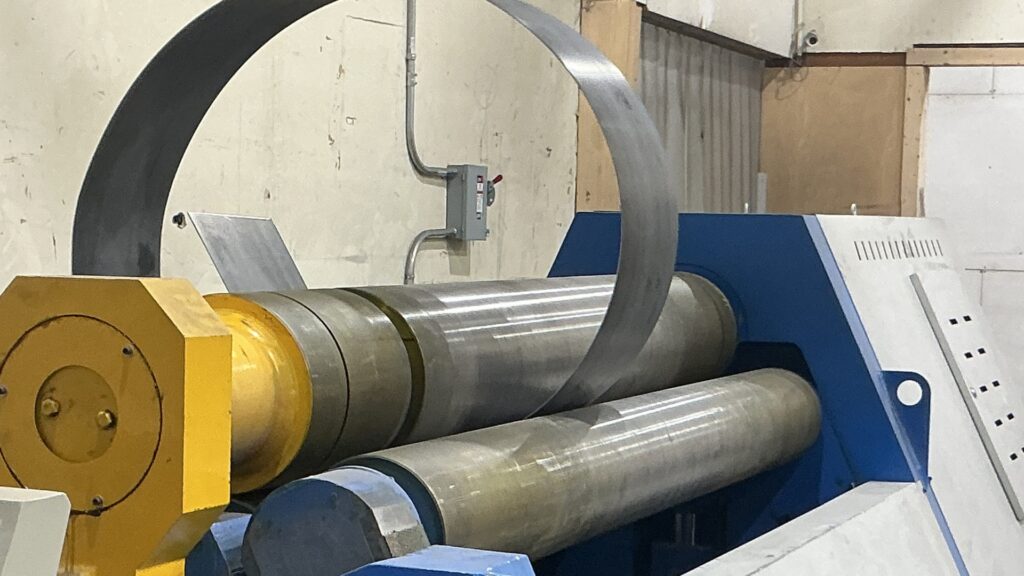
Rolling metal into cylinders, cones, or sweeping curves is a highly specialized skill. Unlike bending, which relies on fixed tooling, rolling is a gradual process of passing the metal back and forth through rollers to get the exact curve.
The price of rolling depends heavily on:
- How thick the material is (heavy plate requires massive rolling machines).
- The tightness of the curve (very tight radii require multiple, slow passes to avoid cracking).
- The required accuracy (achieving a perfect circle takes time and continuous checking).
If you’re designing rolled parts, leaving a slightly wider tolerance on the radius can keep the setup straightforward and the pricing highly competitive.
6. The Quantity Curve: Why the First Part is the Most Expensive
“Why is one prototype $200, but if I order a hundred, they’re only $12 each?” We get this question constantly.
It all goes back to engineering and setup. Whether we are cutting one washer or ten thousand brackets, we still have to import your CAD file, nest it onto a sheet, program the laser, load the raw material, and configure the press brake.
- Prototypes:That entire setup cost is loaded onto a single part.
- Production Runs:That setup cost is diluted across hundreds or thousands of parts.
If you know you’ll need more parts in the future, ordering them all at once is the single best way to slash your per-part price.
7. Ease Up on Your Tolerances
Tighter tolerances don’t make a part better if standard tolerances would work just fine.
When you specify a hyper-tight tolerance (like +/- 0.005 inches), we have to slow down. We have to use more expensive tooling, run constant intermediate inspections, and accept a higher scrap rate because even a tiny speck of dust or mill scale can throw off the measurement.
Ask yourself: Does this feature actually mate with a high-precision machined component? If not, standard fabrication tolerances will save you money and headache.
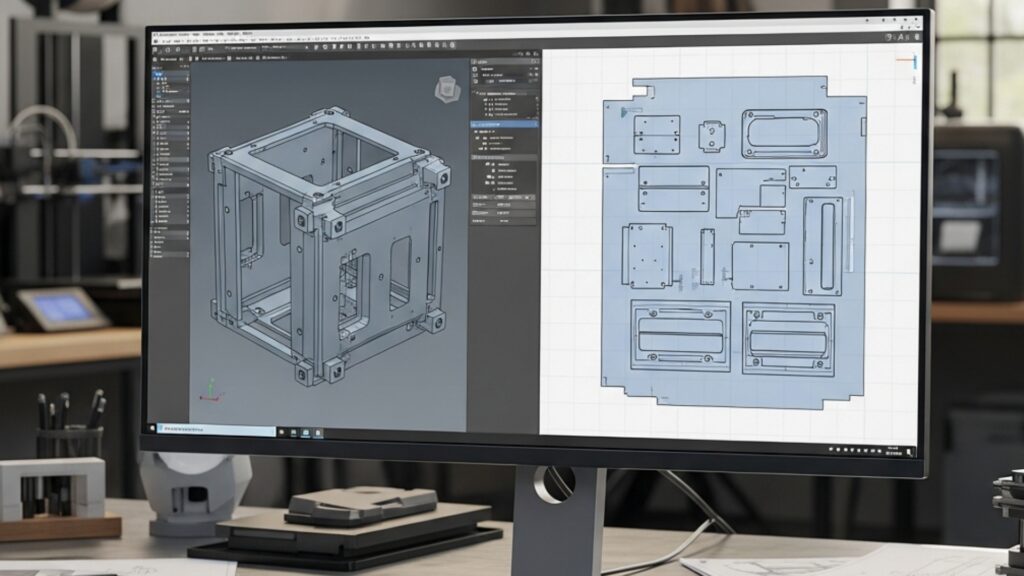
8. File Quality: Help Us Help You
If we get a napkin sketch or a messy, corrupted CAD file, we can’t estimate it accurately without spending time cleaning it up. If there’s uncertainty, estimators will often add a small buffer to the price to cover the risk of unexpected prep work.
For the fastest, lowest quote, send us:
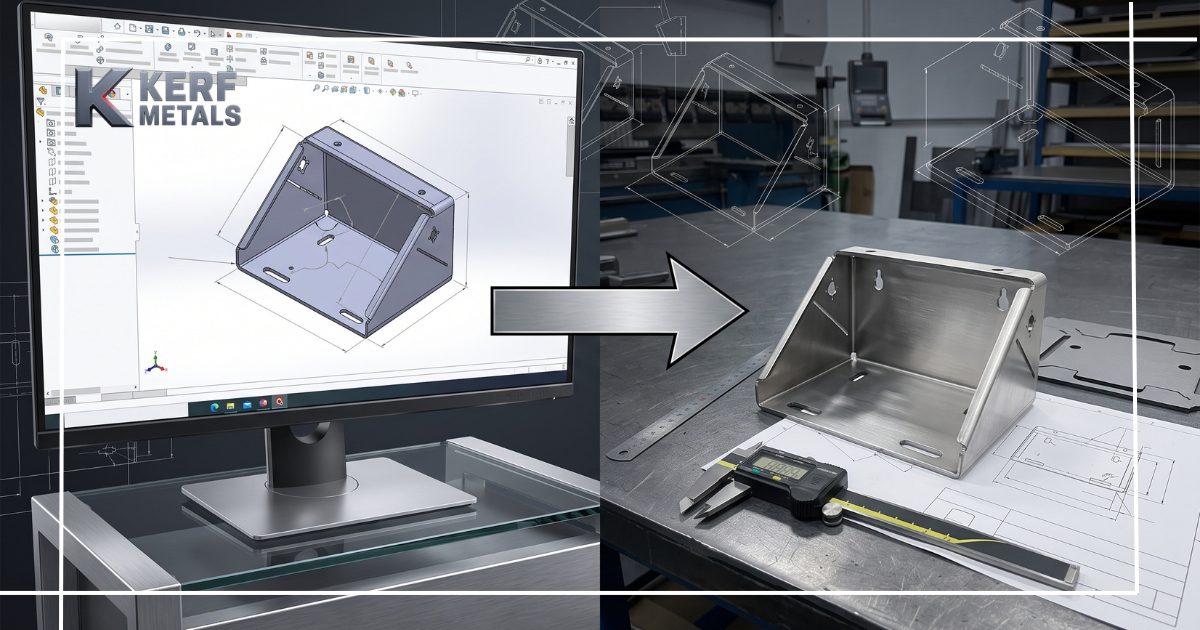
- A clean DXF filefor flat, cut-only parts.
- A STEP filefor formed or rolled parts.
- A PDF drawinghighlighting material, thickness, critical tolerances, and quantities.
When the files are clean, we can import them directly into our quoting software and get a price back to you in record time.
9. Nesting: Minimizing the Scrap
Nesting is the art of packing your parts onto a sheet of metal like a puzzle.
If your parts are oddly shaped or have awkward protrusions, they leave behind a lot of “skeleton” waste-scrap metal we can’t use. Because you pay for the material we consume, poor nesting efficiency means you’re essentially paying for scrap.
If you have flexibility in your design, try to design parts that can easily nest together without leaving giant gaps on the sheet.
10. Avoid the "Rush Job" Trap
Standard lead times exist because they allow us to run our shop efficiently. We can group similar materials together, minimize machine changeovers, and plan our labor.
When a rush job comes in, we have to break down existing setups, pay premium shipping for raw materials, or run overtime shifts. If you can plan your project timeline to allow for standard lead times, you’ll keep your costs completely predictable.
Summary Checklist: How to Keep Your Costs Down
Before you send your drawings to our estimating team, run through this quick checklist to see if you can trim some fat from the price:
- Did I use standard material thicknesses?
- Are my bend radii standardized across the part?
- Can I remove any non-essential cutouts or holes?
- Did I leave tolerances loose on non-critical features?
- Can I increase my order quantity to get a better bulk rate?
- Are my CAD files clean and ready for import?
Why the Cheapest Quote Can End Up Costing the Most
At the end of the day, a rock-bottom price can look incredibly appealing on paper. But if those cheap parts arrive late, fail to fit your assembly, or require hours of manual grinding to clean up messy edges, those initial savings vanish.
We believe in doing things right the first time. Consistent cut quality, accurate bends, honest communication, and reliable delivery are what keep your projects on track and profitable.
Let's Get to Work
Pricing custom metal parts has a lot of moving pieces, but getting a quote shouldn’t be a painful process.
Kerf Metals supports manufacturers, job shops, contractors, and designers with top-tier laser cutting, press brake forming, and metal rolling. Whether you’re prototyping a new invention or need a full production run, we’re here to help you get clean, precise, and reliable components.
We’re based right here in Middlesex, New Jersey. Send over your DXF or STEP files today, and let’s build something together.