Choosing the Right Metal for Fabrication
A successful fabrication job doesn’t start on the shop floor. It starts long before a sheet ever touches the laser table, press brake, or plate roller.
It starts with picking the right material.
Get this choice wrong, and you’re setting yourself up for cracked bends, premature rust, frustrating welds, unexpected weight issues, or costs that spiral way out of budget. Get it right, and everything downstream flows better—faster torch time, easier assembly, lower overall costs, and a part that actually lasts in the field.
The trick is accepting that there’s no single “best” metal out there.
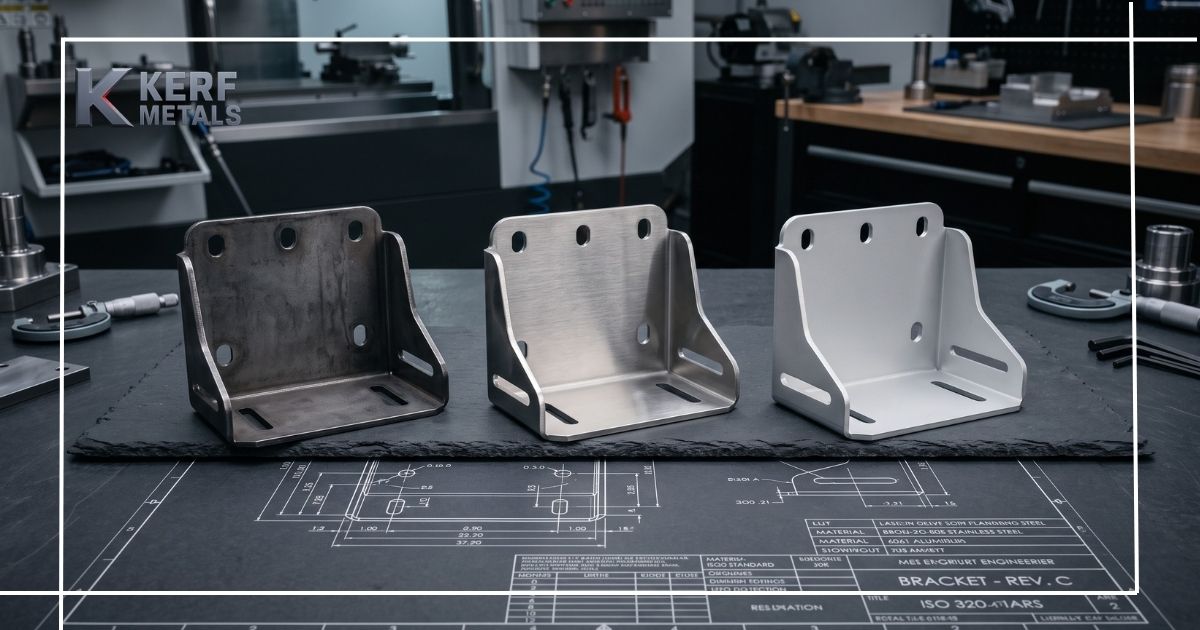
Carbon steel, stainless steel, and aluminum are all outstanding materials, but only when matched to the job they were built for. Picking between them comes down to what the finished part needs to do, where it will live, how you plan to shape it, and how it handles daily wear and tear.
Here is how to break down that decision in practice.
Start With the End Product, Not the Price per Sheet
When choosing metal, the absolute worst place to start is:
“What’s the cheapest sheet on the rack today?”
Instead, run through these practical questions first:
What kind of load or force will this part take?
Is it going inside a climate-controlled room or sitting out in the weather?
Will it run into water, road salt, harsh chemicals, or frequent washdowns?
Does total weight matter for shipping, installation, or performance?
How are we shaping it—laser cutting, brake forming, rolling, or welding?
Are any of these faces going to be visible in the final assembly?
How many years does this component need to stay in service?
What bend radii and tolerances does the print call for?
A sheet that looks like a bargain on a distributor’s quote can quickly become the most expensive option on the floor once you factor in extra secondary ops, tricky finishing, constant maintenance, or early field replacement.
You aren’t just buying raw metal—you’re choosing a material that needs to move smoothly through your shop and perform reliably for the customer.
The 5 Core Factors Driving Metal Selection
1. Load and Structural Requirements
First, figure out what forces your part will handle.
A heavy machinery bracket, a control panel enclosure, a decorative screen, an architectural column, and a rolled tank shell all ask completely different things from a material.
-
Carbon Steel is the classic go-to for load-bearing structural parts. It offers high strength and rigidity without driving material costs through the roof.
-
Stainless Steel delivers strong structural integrity alongside built-in protection against moisture and chemical exposure.
-
Aluminum knocks off a massive amount of weight, but it won’t match steel’s raw stiffness at the exact same gauge. That doesn’t mean aluminum is weak—it just means you need to design around its physical properties by adjusting wall thickness, temper, geometry, or gusseting.
2. Operating Environment
Environment will rule out certain metals before you even generate a toolpath.
Bare carbon steel is great indoors in dry, stable air. Put it outside without paint, powder coating, or galvanizing, and it will start rusting almost immediately.
Stainless steel handles wet conditions, food production lines, chemical washdowns, and weather far better. Even so, stainless isn’t totally bulletproof. You still need to pick the right grade and surface finish—especially if salt spray, deicing agents, or high chlorides are in the picture.
Aluminum forms its own thin oxide layer that naturally resists corrosion in many outdoor setups. Anodizing or powder coating adds even more protection while giving you control over color and appearance.
If your project is going anywhere near New Jersey or New York, pay close attention to environmental exposure. A bracket mounted inside a dry commercial warehouse faces completely different conditions than a rooftop frame, a highway barrier, or a coastal architectural fixture.
3. Weight Considerations
Weight isn’t just about shipping freight. It impacts almost every stage of a part’s lifespan, including:
-
Structural load on supporting members
-
Field installation labor and safety
-
Fuel efficiency and transport limits
-
Equipment payload limits
-
Wear on moving components
-
General ease of handling during assembly
With roughly one-third the density of steel, aluminum is usually the top choice for vehicle bodies, access panels, covers, mobile equipment, or anything workers have to lift manually on a regular basis.
Steel stays the practical pick whenever raw strength, stiffness, or wear resistance takes priority over weight savings.
4. Fabrication Behavior
A metal might look brilliant on a mechanical spec sheet, but if it fights you during cutting and forming, your production line will feel it fast.
Every metal reacts differently to shop processes:
-
Heat input from laser cutting
-
Bending pressure on the press brake
-
Material springback after forming
-
Tight radius limits before cracking
-
Rolling force requirements
-
Weld puddle control and heat distortion
-
Thread tapping and machining
-
Surface preparation for coating
Material grade, temper, thickness, grain direction, and bend line orientation all interact with each other. That’s why it always pays to review material choices with your fabricator before locking down final production prints.
5. Total Life-Cycle Cost
The raw material invoice is only a piece of the final price tag.
Real project cost includes:
-
Cutting speeds and assist gas use
-
Tooling setup and potential wear
-
Forming complexity and scrap rates
-
Secondary deburring or surface prep
-
Welding labor and prep work
-
Freight and job site handling
-
Protective coatings or plating
-
Long-term maintenance and replacement downtime
Saving a few dollars on a cheaper sheet that requires frequent repainting or breaks down early usually ends up costing far more over the life of the installation.
Metal Breakdown: Pros, Cons, and Best Uses
Carbon Steel: The Reliable Workhorse
Low-carbon and mild steels are the backbone of modern industrial manufacturing. They’re affordable, widely available, easy to work with, and weld clean.
Best Used When:
-
High structural strength and stiffness are required
-
The component supports heavy static loads
-
Overall weight isn’t a dealbreaker
-
The design involves welded frames or structural assemblies
-
You need to keep raw material costs under control
-
You plan to apply paint, powder coat, or plating
-
The part operates in dry, indoor conditions
Typical Uses: Machine frames, equipment bases, heavy brackets, mounting plates, safety guards, structural channels, custom machinery parts, and construction weldments.
The Main Trade-Off:
Unprotected carbon steel rusts—period. If your part sits outdoors, gets washed down, or copes with high humidity, you must factor in protective finishing like powder coating, wet paint, zinc plating, or hot-dip galvanizing.
Stainless Steel: Strength, Hygiene, and Corrosion Defense
Stainless steel shines when parts run into water, chemicals, frequent cleaning, or severe outdoor exposure. The chromium blended into the steel forms a self-healing passive surface layer that keeps rust at bay.
Best Used When:
-
Excellent corrosion resistance is non-negotiable
-
Equipment requires daily washdowns or sanitary cleaning
-
Parts must meet food-grade or medical standards
-
An exposed, attractive metallic finish is desired
-
The operating environment is humid or chemically aggressive
-
You want to minimize ongoing maintenance in the field
-
Grade 304: The versatile standard for general industrial equipment, architectural accents, enclosures, brackets, and indoor food equipment.
-
Grade 316: Upgraded with molybdenum for harsher environments – ideal for salt spray, marine exposure, chemical processing, and coastal installations.
The Main Trade-Off:
Stainless steel comes with a higher material cost and demands more attention during fabrication. It work-hardens quickly and exhibits significant springback during bending, meaning tool selection, bend allowances, and angle settings require tight control.
Aluminum: Lightweight, Clean, and Adaptable
If shedding weight is top priority, aluminum is usually your best starting point. Beyond its low weight, it offers good natural corrosion resistance and excellent thermal conductivity.
Best Used When:
-
Saving weight directly improves design performance
-
Parts need to be easy to lift, ship, or install
-
You need natural weather resistance without heavy coatings
-
Heat dissipation is needed (e.g., electronic enclosures)
-
You plan to anodize or powder coat for visual finish
-
The component goes into a vehicle or mobile system
Typical Uses: Sheet metal enclosures, light brackets, covers, transit components, architectural cladding, signage, and heat sinks.
The Main Trade-Off:
Alloys and tempers matter immensely with aluminum. Soft grades bend easily, but harder tempers will snap if you force them around a tight radius. Aluminum also pulls heat away quickly during welding, requiring careful heat control to avoid warping or burn-through. Soft threads can also strip out over repeated use, so threaded inserts (like Helicoils or PEM studs) are often necessary.
What About Galvanized Steel?
Galvanized steel offers a handy middle ground between raw carbon steel and stainless. It’s carbon steel protected by a factory-applied zinc coating that acts as a sacrificial shield against rust.
Best Used For:
Outdoor framing and structural supports
HVAC ducting and utility boxes
Agricultural equipment enclosures
Construction components exposed to damp air
Key Caution:
Cutting, welding, or grinding galvanized sheet damages or burns off the zinc layer at the edge or joint. Those bare spots need post-fabrication cold-galvanizing touch-ups to retain their rust resistance.
How Material Selection Impacts Shop Operations
1. Laser Cutting
A fibre laser handles all three main metals well, but each reacts differently:
Carbon Steel: Cuts cleanly across a wide gauge range using oxygen or nitrogen assist gas.
Stainless Steel: Uses high-pressure nitrogen to blow away molten metal, leaving clean, bright, burr-free edges ready for immediate welding or assembly.
Aluminium: Reflective and thermally conductive, requiring carefully tuned power and speed settings to prevent dross and ensure a square cut edge.
2. Metal Bending
Press brake operations rely entirely on how a metal yields:
Mild Steel: Predictable yield point and manageable springback. Very forgiving across standard die widths.
Stainless Steel: Requires significantly higher tonnage to form and springback is pronounced. Dies must be chosen carefully to avoid marking visible surfaces.
Aluminium: Highly dependent on alloy and temper. Grain direction plays a huge role in preventing cracks along bend lines. Cutouts and holes must also stay clear of the bend zone to prevent distorting out of round.
3. Metal Rolling
Rolling plate or sheet into cylinders, cones, and arcs demands predictable material behaviour:
Mild Steel: Rolls consistently with predictable crown control, making it ideal for pressure vessels, tanks, and large structural rings.
Stainless Steel: Takes higher rolling pressure and springs back aggressively. Seam alignment requires careful prep for post-roll welding.
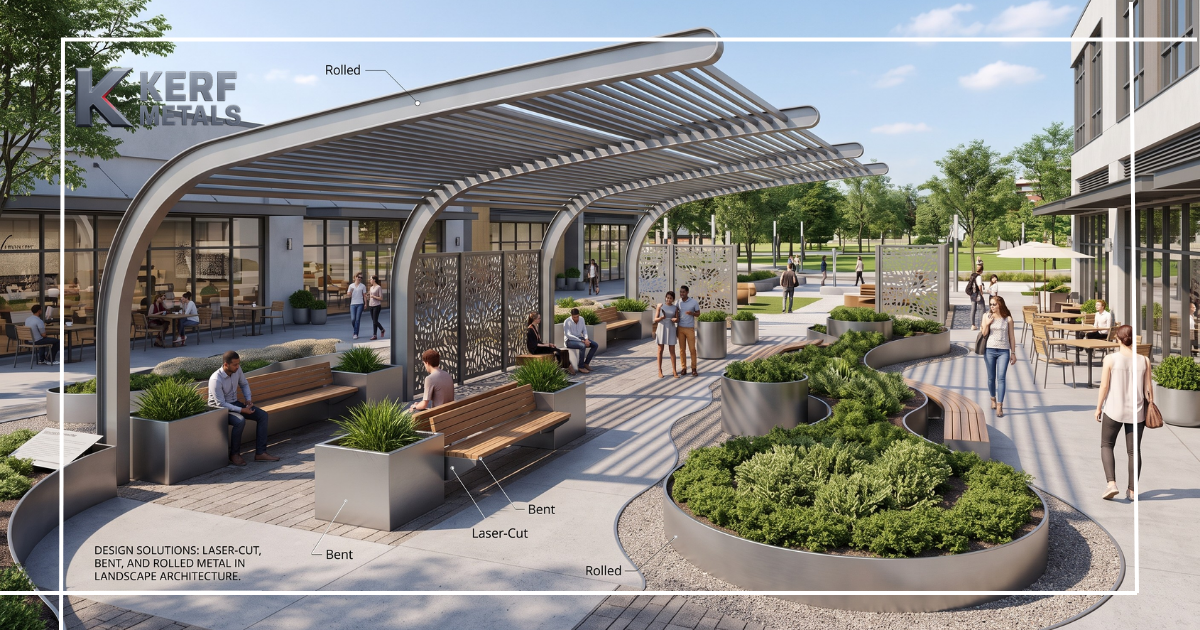
Aluminium: Great for light cylinders or curved architectural panels, but requires generous minimum radii to avoid stretching or surface marring.
Quick Reference Material Guide
|
Project Goal |
Recommended Starting Material |
|---|---|
|
Lowest raw material cost + structural strength |
Carbon Steel |
|
Heavy load-bearing frame or base |
Carbon Steel |
|
Outdoor structural steel (cost-conscious) |
Galvanized Steel or Painted Carbon Steel |
|
Washdown, food, or sanitary equipment |
304 Stainless Steel |
|
Coastal, marine, or high-chloride air |
316 Stainless Steel |
|
Lightweight enclosure, panel, or bracket |
Aluminum |
|
Heat dissipation or electronic housing |
Aluminum |
|
Mobile, transit, or vehicle parts |
Aluminum |
|
Curved structural shell or tank |
Carbon Steel (or Stainless depending on media) |
Connecting the Dots: Cut, Bend, and Roll
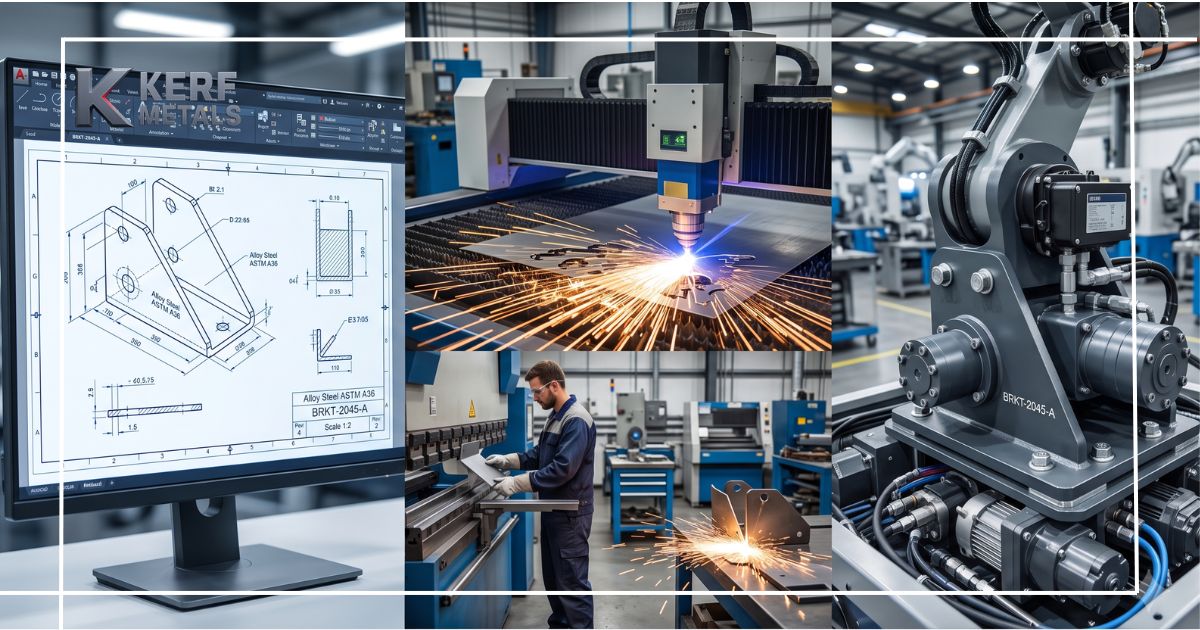
The smoothest production runs happen when laser cutting, bending, and rolling are planned as one connected workflow.
At Kerf Metals, material selection and CAD files are evaluated with every downstream operation in mind:
-
Laser cutting files incorporate correct kerf offsets and lead-ins for the chosen material.
-
Bend lines, hole locations, and springback allowances are verified before the press brake fires.
-
Rolled parts account for straight tail allowances, seam locations, and final weld prep.
By managing these three core operations under one roof, manufacturers, OEMs, contractors, and engineering teams across New Jersey and New York avoid vendor ping-pong, dimensional mix-ups, and costly job site delays.
Talk to Your Fabricator Before Finalizing Prints
You don’t need every single detail worked out before reaching out. Sending preliminary drawings early allows us to suggest minor tweaks that can save real time and money.
When requesting a quote, try to share:
-
CAD files (STEP, DXF, or PDF)
-
Where and how the part will be used
-
Preferred material and gauge (if known)
-
Estimated production quantities
-
Weight or load considerations
-
Surface finish requirements
-
Critical dimensions and tolerances
Frequently Asked Questions
What is the best metal for laser cutting?
Carbon steel, stainless steel, and aluminum all cut cleanly on modern fiber lasers. The “best” one depends entirely on your needs for strength, weight, corrosion resistance, and post-cut finishing.
Is aluminum or stainless steel better for outdoor parts?
Both perform well outdoors, but in different ways. Aluminum is lightweight and naturally resists rusting, making it great for covers and panels. Stainless steel offers far greater mechanical strength and impact resistance. For severe coastal salt exposure, 316 stainless steel or anodized marine-grade aluminum are your best options.
Which metal is easiest to bend on a press brake?
Low-carbon (mild) steel is the most predictable and forgiving. Aluminum forms easily as well, provided you choose a bendable alloy and temper (like 5052-H32). Stainless steel requires the highest tonnage and exhibits the most springback.
Can one fabricator handle cutting, bending, and rolling together?
Yes. Partnering with a single shop for laser cutting, brake forming, and plate rolling ensures your flat blanks are prepped accurately for secondary forming, keeping tolerances tight from start to finish.
Does Kerf Metals serve New Jersey and New York?
Yes. Based in Middlesex, New Jersey, Kerf Metals supplies custom laser cut, bent, and rolled metal components to OEMs, contractors, and manufacturers throughout New Jersey, New York, and surrounding regions.
Why American Precision Metal Fabrication Is a Strategic Advantage for OEMs
For years, the standard playbook for OEM procurement teams was straightforward: blast out RFQs globally, pick the quote with the lowest unit price, sign the purchase order, and move on. That usually meant shipping jobs across the globe where labour rates looked low, and sea routes seemed reliable enough.
Then reality hit. Cargo ships backed up at port, container rates went through the roof, and a single delayed bracket or mispunched enclosure brought a multi-million-dollar assembly line to a grinding halt.
Suddenly, those “cheap” components didn’t look like such a deal. Today, selecting a domestic metal fabrication partner isn’t just a routine purchasing decision-it directly determines your line speed, working capital, design agility, and brand reputation.
Looking Beyond the Piece Price: The Real Math of Metal Sourcing
When you review a metal quote, the piece price is only a fraction of the equation.
What happens when you add ocean freight, import duties, harbor maintenance fees, third-party CMM inspections, and emergency safety stocks? What about the hidden costs of late shipments, misaligned mounting holes, uneven powder coat finishes, or late-night emails struggling to negotiate engineering change notices (ECNs) across a 12-hour time difference?
When you add up those line items, that low unit price evaporates fast.
Forward-thinking OEM buyers and manufacturing engineers evaluate vendors based on Total Cost of Ownership (TCO). In sheet metal and heavy plate fabrication, real savings come from looking at the full operational picture-raw material fluctuations, tariffs, freight, warranty claims, and supply chain agility.
The real question isn’t “Who can laser-cut and bend this part for the fewest dollars on paper?”
It’s “Which precision fabricator helps us build reliable products with the lowest overall risk to our production schedule?”
Shorter Supply Chains Keep the Assembly Floor Moving
Precision OEM manufacturing runs on a tight rhythm. If a main chassis, structural frame, or custom bracket fails to show up on schedule, your entire assembly team sits idle.
When your fabricator is operating across an ocean, your options during a crisis are painfully limited. Air-freighting heavy steel or aluminum plate is obscenely expensive. Replacement runs take weeks to punch, form, and ship across sea lanes. Quick design adjustments drag out over days of frustrating back-and-forth messages.
Partnering with an American metal fabricator cuts down that physical distance. Bringing production back onshore delivers:
Predictable, realistic lead times: No waiting weeks for containers to clear customs.
Agile volume adjustments: The freedom to scale orders without wrecking your master schedule.
Minimal exposure to freight spikes: Less risk from global shipping shocks and fuel surcharges.
Leaner safety stocks: Free up valuable warehouse space and working capital.
Direct access to experts: Talk directly to the manufacturing engineers, programmers, and welders crafting your parts.
It doesn’t make risk disappear entirely, but it puts you back in control. If a revision hits or demand surges, you can call the shop floor-or visit in person-and resolve it the same day.
Why Single-Roof Integrated Fabrication Matters
Geographic proximity is a solid start, but a fabricator’s internal shop setup matters just as much.
If a domestic vendor outsources every step-sending fiber laser cutting to one shop, press brake bending to another, CNC machining somewhere else, and powder coating across town-you still end up with long lead times, extra markup, and finger-pointing when a quality defect crops up.
The true competitive advantage comes from working with a single-roof precision metal fabricator. An integrated facility keeps core capabilities under one roof: DFM engineering, high-speed laser cutting, precision bending, CNC machining, AWS-certified welding (MIG/TIG/robotic), hardware insertion (PEM installation), powder coating, and final assembly.
Single-source fabrication removes handoffs and creates complete accountability.
Here’s what that looks like on the shop floor:
Instant problem solving: If a material springback issue or tight bend radius causes a fit-up problem, the welder, brake operator, and DFM engineer walk over to the part together and fix it immediately.
Consistent quality control: From the initial sheet cut to final CMM inspection and finish testing, every step follows one unified ISO quality standard.
True flexibility: Need five prototype enclosures built before locking in a production run of 5,000? An integrated shop can pivot smoothly without re-negotiating terms across four different subcontractors.
Precision Downstream: Protecting the Complete OEM Assembly
A fabricated metal component rarely stands alone. It bolts into a complex frame, shields sensitive electronics, or mates with hydraulic lines and machined fittings.
If a mounting hole is off by half a millimeter, a weld seam distorts the mating surface, or a bend has too much springback, the problem multiplies down the line. Your assembly crews end up redrilling holes, forcing fits, or scrapping parts outright.
Precision isn’t just about making one pristine sample for approval. It’s about repeatability over hundreds or thousands of cycles. Can the fabricator deliver part #500 with the exact same tolerances, deburring, and surface finish as part #1?
A reliable American metal fab partner invests in multi-axis CNC equipment, modern fiber lasers, calibrated press brakes, and AWS-certified welders to ensure every batch drops right onto your production line without hiccups.
DFM: Engaging Metal Fabricators Early in Design
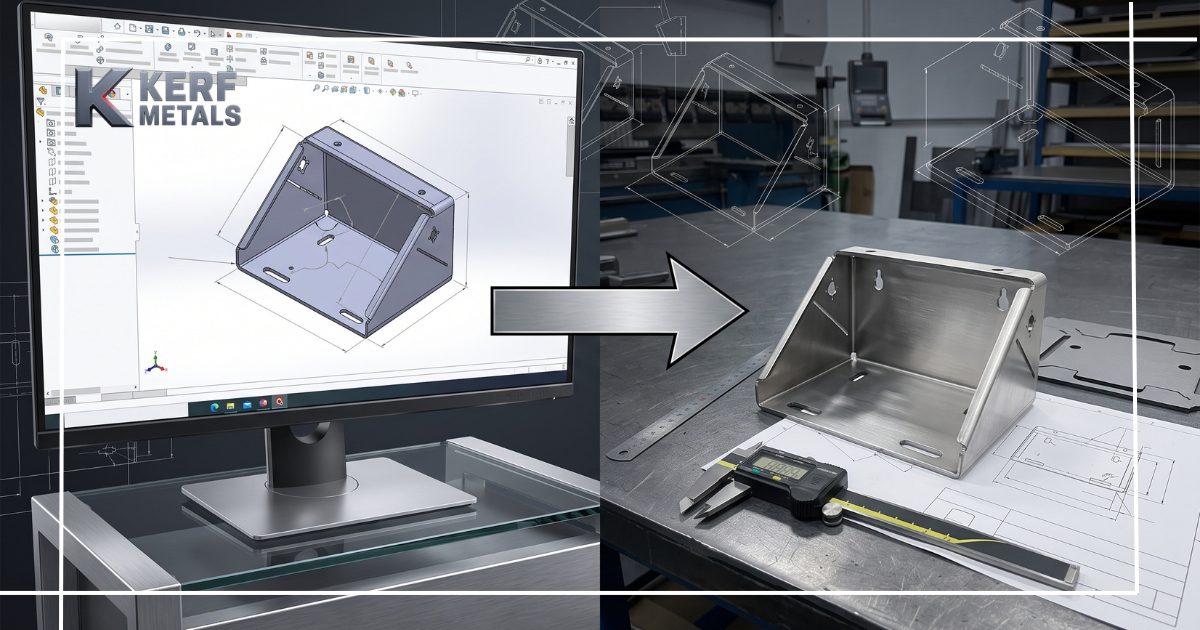
Product design is rarely a straight line. A 3D CAD model looks flawless on screen, but sheet metal behaves differently in the real world under bend pressure, heat distortion, and grain orientation.
When OEMs collaborate early with experienced fabricators through Design for Manufacturability (DFM), they unlock massive savings before a single sheet of steel or aluminum is cut.
An experienced metal fabricator can spot critical details early:
Complex bend sequences that require custom, expensive tooling when a standard punch and die set would work.
Overly tight tolerances on non-critical dimensions that drive up machining costs unnecessarily.
Opportunities to combine welded sub-assemblies into a single folded sheet metal part.
Alternative material grades (e.g., swapping hard-to-source alloys for readily available 304 stainless or 6061 aluminum) that maintain structural integrity while cutting lead times.
Ideal PEM hardware placement to avoid interference during press brake operations.
This early feedback loop prevents costly tooling reworks, reduces material scrap rates, and accelerates time-to-market-giving you a sharp edge over competitors stuck in slow revision cycles.
Smarter Inventory: From Safety Stocks to Blanket Orders
Ordering metal components from overseas forces you into massive minimum order quantities (MOQs) just to fill container space. That locks up cash flow and leaves you with obsolete inventory whenever an engineering change notice (ECN) drops.
Domestic fabrication lets you adopt agile inventory strategies like Kanban, Just-In-Time (JIT) delivery, or stocking agreements. You can order in smaller, more manageable batches tied directly to your actual build schedule.
If market demand surges, your fabricator can ramp up production. If you launch a Version 2.0 design, you aren’t stuck scrapping tons of outdated metal parts sitting in a warehouse.
A Strategic Business Advantage, Not Just Sourcing
At the end of the day, sourcing domestic metal fabrication isn’t just about patriotic branding-it’s a clear business strategy.
It’s about risk mitigation, speed, cash flow management, and tight quality control. While simple, ultra-high-volume commodity stampings might still make sense offshore, complex, tight-tolerance, and mission-critical fabricated metal components belong closer to home.
The modern question for OEM procurement isn’t whether domestic metal fabrication costs a few cents more per unit on paper.
The real question is: What is it costing you in delayed shipments, scrap, field rework, and halted assembly lines to source overseas?
Partnering with an experienced, integrated American metal fabrication shop is a direct investment in a resilient, high-performing manufacturing operation.
Metal Fabrication Cost Guide: What Really Drives the Price of Custom Metal Parts
Why Are Metal Fabrication Quotes All Over the Place?
If you’ve ever sent the exact same drawing to three different metal shops and received wildly different quotes, you are definitely not alone. It’s incredibly frustrating.
But there is a method to the madness. These price differences don’t just happen because one shop wants to overcharge you. They happen because estimators look at your design through different lenses—calculating setup times, raw material waste, machine wear, and handling complexity in their own ways.
At Kerf Metals, we live and breathe precision laser cutting, metal bending, and metal rolling. We want to lift the hood and show you exactly what goes into pricing a job, plus how a few small design tweaks on your end can save you serious money before you even hit “submit” on your quote request.
The Anatomy of a Metal Fabrication Quote
When we send over a price, we aren’t just charging you for a raw sheet of steel. A clean, accurate estimate is a puzzle made of several pieces:
- The raw material stock (and how much of it ends up as scrap)
- The actual time the laser head spends cutting and piercing
- The manual setup and handling required at the press brake
- The skill and machinery needed to roll curves
- Tooling constraints and tolerance requirements
- The size of your order
- How clean your CAD files are when we import them
Let’s dive into each of these so you can see where the money actually goes.
1. Material Type: Choose Wisely
Material is almost always the heaviest cost driver.
First up is carbon steel. It’s the workhorse of the industry-cost-effective, highly predictable, and easy to work with. If you step up to stainless steel, you’re paying a premium for corrosion resistance and a clean, bare-metal look. Aluminum is incredibly light and corrosion-resistant, but it behaves differently under a laser and a press brake, meaning it sometimes requires extra care and specialized tooling.
The takeaway here? Don’t over-specify. If your parts are going to be powder-coated and will live indoors, stick to standard carbon steel. There’s no need to pay the stainless premium unless the environment demands it
2. Thickness: The Hidden Price Multiplier
Thickness does more than just add weight to your shipping bill-it drastically alters machine run times.
Thin sheet metal cuts incredibly fast. But as the gauge climbs, the laser has to crawl. It uses more power, more assist gas (like oxygen or nitrogen), and takes longer to pierce the initial hole before starting a cut.
Thickness also forces us to use heavier, slower forming equipment. If you can drop down a gauge or two without sacrificing the structural integrity of your assembly, you will see an immediate drop in your unit cost.
3. Laser Cutting: It's All About "Time on the Table"
Lasers are fast, but they aren’t magic. We price cutting based on machine runtime, which is driven by two main factors: cut length and piercing.
Every time the laser starts a new cut-like an internal bolt hole-it has to stop, blast a hole through the metal (pierce), and then start moving. If you design a bracket with fifty tiny decorative cutouts, the laser has to pierce fifty times. That takes a lot longer than cutting one continuous outer profile.
If you want to keep cutting costs low, simplify. Remove unnecessary holes or cutouts, and let standard drills handle the tiny holes post-fab if it makes sense for your workflow.
4. Bending: The Press Brake Bottleneck
A common myth is that bending is cheap because it “only takes a second.” The actual bend takes a second; the setup takes much longer.
An operator has to select the right upper punch and lower die, load them into the machine, set the backgauges, and run a few test scraps to account for “springback” (how much the metal relaxes after being bent).
If your part has five identical 90-degree bends, that’s incredibly fast. The operator sets up the machine once and knocks out the run. But if your part has five different angles or three different bend radii, that means multiple tool setups.
Pro Tip: Standardize your bends. Try to keep all your radii and angles the same across the entire design so we can form the part in a single setup.
5. Rolling: Where Craft Meets Machinery
Rolling metal into cylinders, cones, or sweeping curves is a highly specialized skill. Unlike bending, which relies on fixed tooling, rolling is a gradual process of passing the metal back and forth through rollers to get the exact curve.
The price of rolling depends heavily on:
- How thick the material is (heavy plate requires massive rolling machines).
- The tightness of the curve (very tight radii require multiple, slow passes to avoid cracking).
- The required accuracy (achieving a perfect circle takes time and continuous checking).
If you’re designing rolled parts, leaving a slightly wider tolerance on the radius can keep the setup straightforward and the pricing highly competitive.
6. The Quantity Curve: Why the First Part is the Most Expensive
“Why is one prototype $200, but if I order a hundred, they’re only $12 each?” We get this question constantly.
It all goes back to engineering and setup. Whether we are cutting one washer or ten thousand brackets, we still have to import your CAD file, nest it onto a sheet, program the laser, load the raw material, and configure the press brake.
- Prototypes:That entire setup cost is loaded onto a single part.
- Production Runs:That setup cost is diluted across hundreds or thousands of parts.
If you know you’ll need more parts in the future, ordering them all at once is the single best way to slash your per-part price.
7. Ease Up on Your Tolerances
Tighter tolerances don’t make a part better if standard tolerances would work just fine.
When you specify a hyper-tight tolerance (like +/- 0.005 inches), we have to slow down. We have to use more expensive tooling, run constant intermediate inspections, and accept a higher scrap rate because even a tiny speck of dust or mill scale can throw off the measurement.
Ask yourself: Does this feature actually mate with a high-precision machined component? If not, standard fabrication tolerances will save you money and headache.
8. File Quality: Help Us Help You
If we get a napkin sketch or a messy, corrupted CAD file, we can’t estimate it accurately without spending time cleaning it up. If there’s uncertainty, estimators will often add a small buffer to the price to cover the risk of unexpected prep work.
For the fastest, lowest quote, send us:
- A clean DXF filefor flat, cut-only parts.
- A STEP filefor formed or rolled parts.
- A PDF drawinghighlighting material, thickness, critical tolerances, and quantities.
When the files are clean, we can import them directly into our quoting software and get a price back to you in record time.
9. Nesting: Minimizing the Scrap
Nesting is the art of packing your parts onto a sheet of metal like a puzzle.
If your parts are oddly shaped or have awkward protrusions, they leave behind a lot of “skeleton” waste-scrap metal we can’t use. Because you pay for the material we consume, poor nesting efficiency means you’re essentially paying for scrap.
If you have flexibility in your design, try to design parts that can easily nest together without leaving giant gaps on the sheet.
10. Avoid the "Rush Job" Trap
Standard lead times exist because they allow us to run our shop efficiently. We can group similar materials together, minimize machine changeovers, and plan our labor.
When a rush job comes in, we have to break down existing setups, pay premium shipping for raw materials, or run overtime shifts. If you can plan your project timeline to allow for standard lead times, you’ll keep your costs completely predictable.
Summary Checklist: How to Keep Your Costs Down
Before you send your drawings to our estimating team, run through this quick checklist to see if you can trim some fat from the price:
- Did I use standard material thicknesses?
- Are my bend radii standardized across the part?
- Can I remove any non-essential cutouts or holes?
- Did I leave tolerances loose on non-critical features?
- Can I increase my order quantity to get a better bulk rate?
- Are my CAD files clean and ready for import?
Why the Cheapest Quote Can End Up Costing the Most
At the end of the day, a rock-bottom price can look incredibly appealing on paper. But if those cheap parts arrive late, fail to fit your assembly, or require hours of manual grinding to clean up messy edges, those initial savings vanish.
We believe in doing things right the first time. Consistent cut quality, accurate bends, honest communication, and reliable delivery are what keep your projects on track and profitable.
Let's Get to Work
Pricing custom metal parts has a lot of moving pieces, but getting a quote shouldn’t be a painful process.
Kerf Metals supports manufacturers, job shops, contractors, and designers with top-tier laser cutting, press brake forming, and metal rolling. Whether you’re prototyping a new invention or need a full production run, we’re here to help you get clean, precise, and reliable components.
We’re based right here in Middlesex, New Jersey. Send over your DXF or STEP files today, and let’s build something together.