
Anybody Can Cut Metal. Getting It Right Is Where the Real Value Lies.
Let’s be honest, cutting metal isn’t exactly hard. Grab a basic tool, make some sparks, and you’ve got two pieces of metal instead of one.
But getting a clean, highly repeatable, dead-accurate cut that’s actually ready for the next stage of your project? That is where things get tricky.
Depending on what you’re building, there are a dozen different ways to slice through steel, aluminium, or stainless. Hand tools, band saws, shears, plasma cutters, heavy torches, waterjets, and lasers all have their place. They all remove material, but they definitely don’t deliver the same edge quality, dimensional tolerances, or material yield.
And if you’re running a business, those differences directly impact your bottom line. A rough, jagged edge might fly for a quick patch job in the back of the shop. When your parts must fit perfectly, how you cut metal matters.
They may need to line up with pre-drilled holes.
They may need to bend the same way every time.
They may need to roll smoothly without constant adjustments.
So, cutting metal is a strategic choice, not just a shop task.
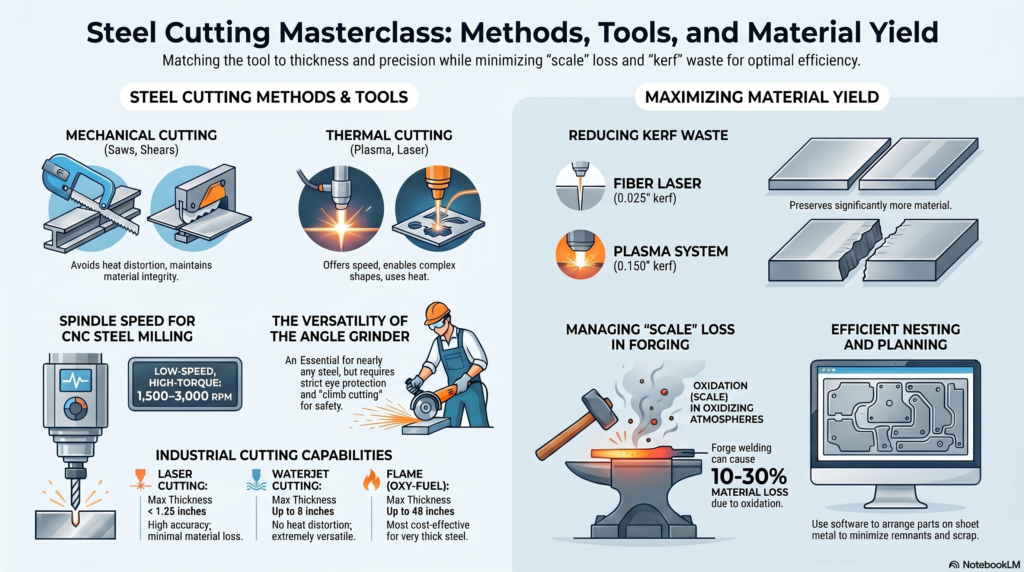
Why "Kerf" Is More Than Just a Detail
When people think of metal waste, they usually picture the pile of scrap swept off the floor at the end of the day. But waste is often much more subtle-and expensive. It shows up in sloppy nesting layouts, wide kerf cuts, and parts that need hours of extra grinding.
Worse, it can lead to rejected parts in the scrap bin because they don’t fit.
Your material yield is simple. It shows how much usable part you get from a sheet, plate, or tube. It also shows how much material you throw away. Getting the most out of your material requires a bit of upfront planning.
That means using smart, tight nesting to get the most from each sheet.
It also means choosing a process with a narrower kerf to save material.
Keep tolerances tight so nobody wastes time trimming parts during assembly.
This is where a professional cut pays for itself. A cheap, rushed cut often ends up costing the most. Your team may spend hours cleaning up edges. They may also need to remake ruined pieces.

Choosing the Right Tool for the Job
Different projects require different tools, and every cutting method is a trade-off.
If you just need a quick, straight chop on a piece of tubing or structural steel, a band saw is great. Shearing is incredibly fast for basic sheet metal prep. Plasma is a reliable workhorse for cutting heavy steel plate when speed matters more than a clean edge. Flame cutting is the go-to choice for very thick materials. Waterjets work well on thick plates because they do not cause heat distortion.
They can be slow and costly to run.
Laser cutting is the sweet spot when you need high precision, clean edges, and minimal waste.
For sheet and plate work, it gives you the best balance of speed and dead-on accuracy. It is very useful for detailed parts, complex hole patterns, or edges that can go straight to assembly without extra cleanup. It isn’t a silver bullet for every job.
It’s about matching the method to the material and thickness.
It also depends on your project’s target budget.

A Great Cut Makes Bending and Rolling Easy
Don’t forget that cutting is rarely the final step in the process.
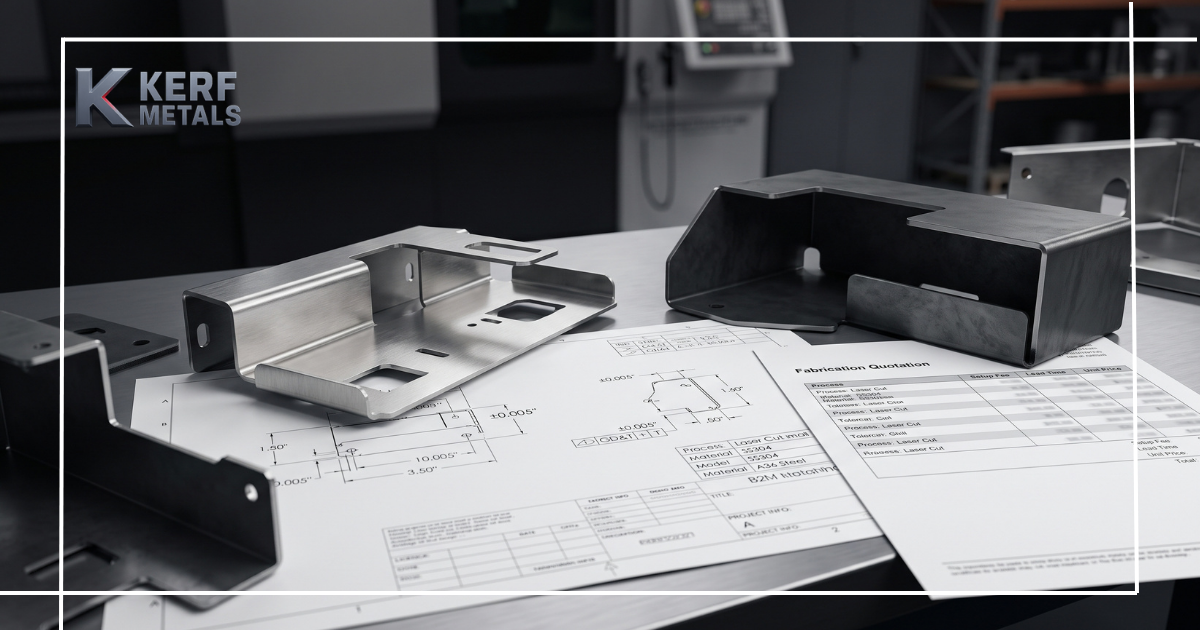
If your parts are headed to a press brake next, the quality of that initial cut dictates how easy they are to form. If your edges are inconsistent or your dimensions are slightly off, the bending process becomes incredibly unpredictable.
The same goes for rolling. A perfectly prepared, clean blank gives you a much better starting point for a smooth, uniform roll.
A bad early cut can affect every step of fabrication.
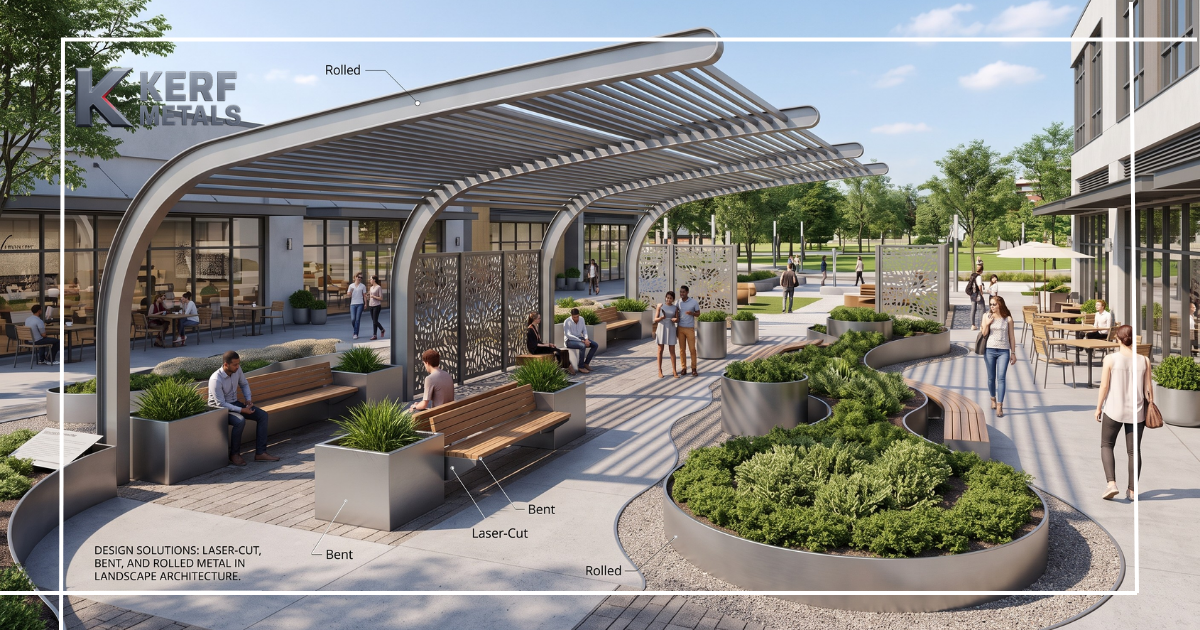
So, Kerf Metals focuses on core services: precision laser cutting, bending, and rolling. We don’t make finished retail products. We fabricate exact, reliable components that keep your production lines running smoothly.

Cutting Out the Rework
Rework is easily one of the biggest profit-killers in any fabrication shop. It eats up expensive labour, blows past deadlines, and turns a profitable project into a stressful loss.
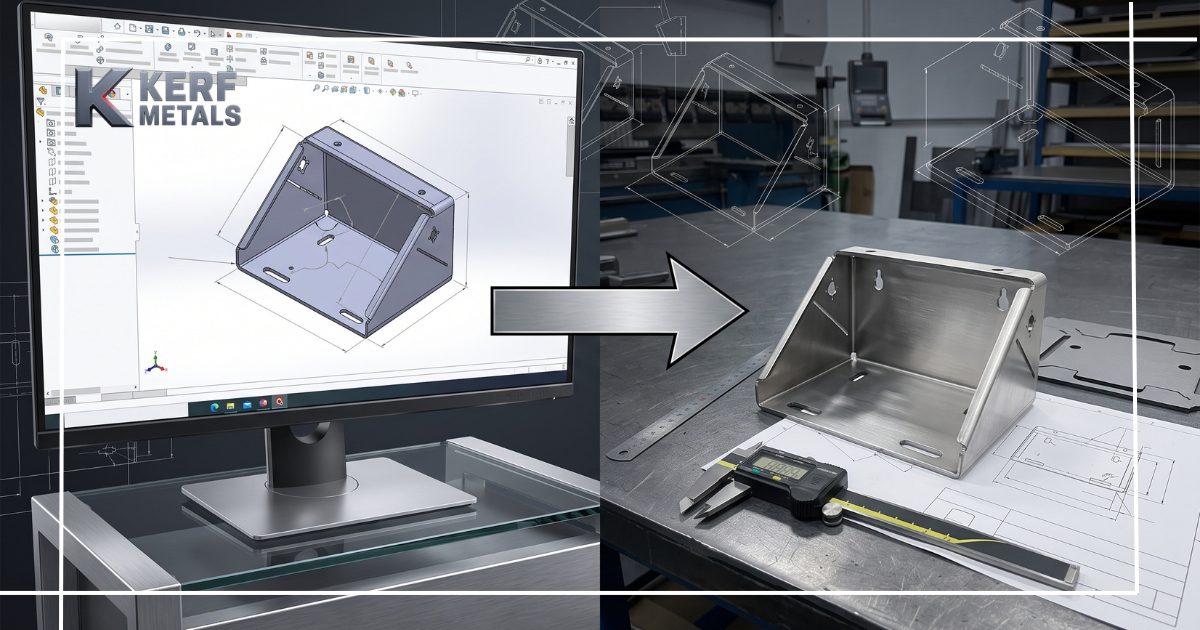
Clean, highly accurate cutting is your best insurance policy against that risk. When parts are cut to match your CAD file and nested to use the full sheet, they arrive ready. You can weld, paint, or bolt them together without tedious manual adjustments. That’s the real value of working with a specialist.
Partner With Kerf Metals
Kerf Metals provides precision laser cutting, metal bending, and metal rolling services for businesses that need reliable metal processing.
We work with stainless steel, aluminium, and carbon steel projects where accuracy and clean execution matter. Whether you need custom prototypes, high-volume runs, or simple cut-to-size metal blanks, our goal is simple. We make sure your parts are right the first time. So you can move forward with confidence.
Send over your drawings, files, or project details, and we’ll help you figure out the best way to get them made.