How to Compare Metal Fabrication Quotes Beyond the Price Per Part
When comparing metal fabrication quotes, it is easy to focus on one number: the price per part.
But the lowest unit price does not always mean the lowest overall project cost.
Material specifications, tolerances, secondary operations, lead times, shipping, and production consistency can all affect what you ultimately pay. For procurement teams, manufacturers, and engineers, a better comparison starts with understanding exactly what is included in each quote.
Here are the main factors to review before choosing a metal fabrication supplier.
1. Make Sure the Material Specifications Match
Two quotes may look similar while being based on different assumptions.
Confirm that every supplier is quoting the same:
Material type
Material grade
Sheet or plate thickness
Part dimensions
Quantity
A change in steel grade, stainless alloy, aluminum type, or thickness can significantly affect material cost and processing requirements.
If the material is not clearly defined in the quote, ask for clarification before comparing prices.
2. Review the Required Tolerances
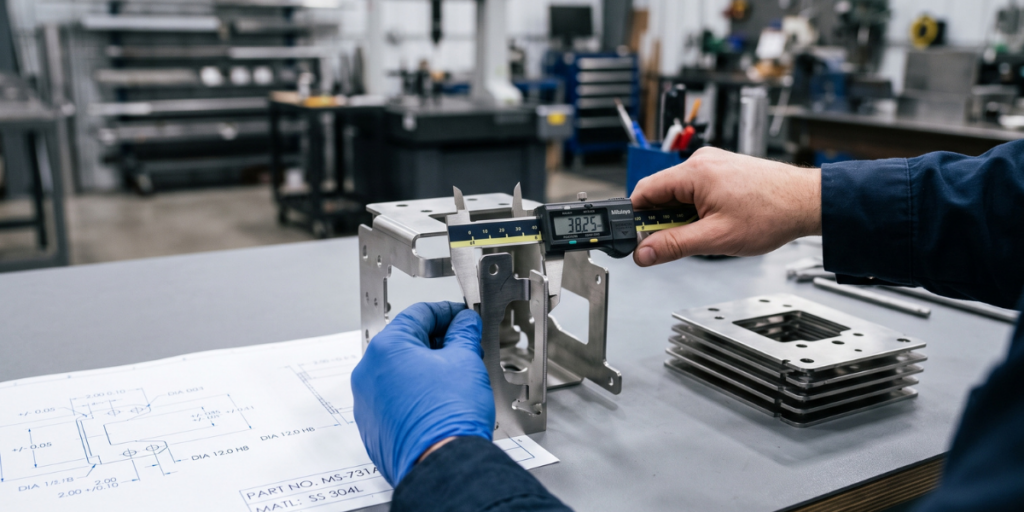
Tighter tolerances often require more production control, inspection, and setup.
That means a quote for a standard laser-cut component should not necessarily be compared directly with a quote that includes more demanding dimensional requirements.
Engineers should clearly identify critical tolerances in the drawing rather than applying unnecessarily tight tolerances across the entire part.
This helps fabricators quote the project accurately and reduces the risk of unexpected production issues later.
3. Check Which Operations Are Included
A low cutting price may only cover one stage of production.
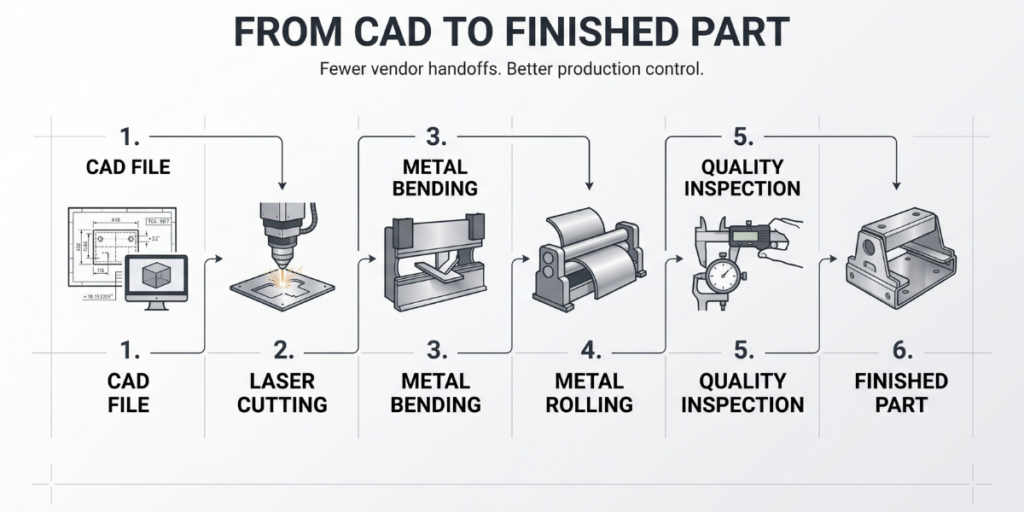
If your part also requires bending, rolling, deburring, or other processing, those operations may need to be handled by additional suppliers.
Before selecting a quote, determine whether it includes:
Laser cutting
Metal bending
Metal rolling
Edge cleanup or deburring
Required inspections
Packaging
Delivery
Working with a supplier that can perform several operations under one roof can reduce transportation between vendors and simplify production coordination.
4. Compare Lead Times, Not Just Pricing
A lower price is less valuable if parts arrive after they are needed.
Lead time can affect production schedules, installation dates, inventory levels, and your ability to respond to customer demand.
Ask suppliers when production can begin and when the completed parts are expected to ship.
For repeat orders, it is also worth understanding whether those lead times can remain consistent as volumes change.
5. Consider Setup Costs and Order Quantity
The relationship between quantity and price per part is important in custom metal processing.
Programming, machine setup, material handling, and nesting all contribute to the cost of a job.
For a prototype or small production run, those costs are spread across fewer components. As quantities increase, the unit cost may decrease.
When comparing quotes, make sure every supplier is pricing the same quantity and confirm whether future production volumes could change the pricing structure.
6. Look at the Quality of the Information in the Quote
The quote itself can tell you something about the supplier.
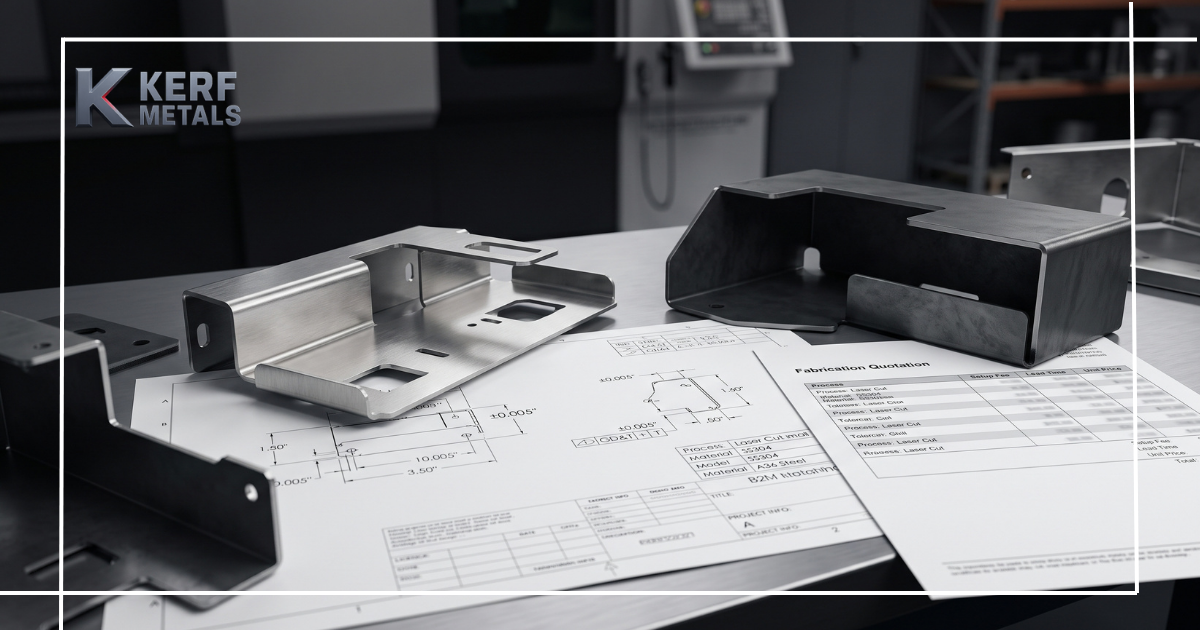
A detailed quote should make it clear what is being produced, which material is being used, what operations are included, and what the expected delivery schedule is.
If important details are missing, those gaps can later turn into change orders, production delays, or misunderstandings.
Good communication during the quoting process is especially important for custom components where drawings, dimensions, and manufacturing requirements may need clarification.
7. Factor in Shipping and Supplier Location
Freight can change the economics of a fabrication project, especially with large, heavy, or recurring orders.
For manufacturers and contractors in New Jersey and New York, working with a regional metal processing supplier can also make communication, delivery coordination, and design revisions easier.
The lowest quoted part price from a distant supplier may become less competitive once freight and longer logistics are included.
8. Evaluate Repeatability for Future Orders
A successful first order is important, but many OEM and manufacturing projects require repeat production.
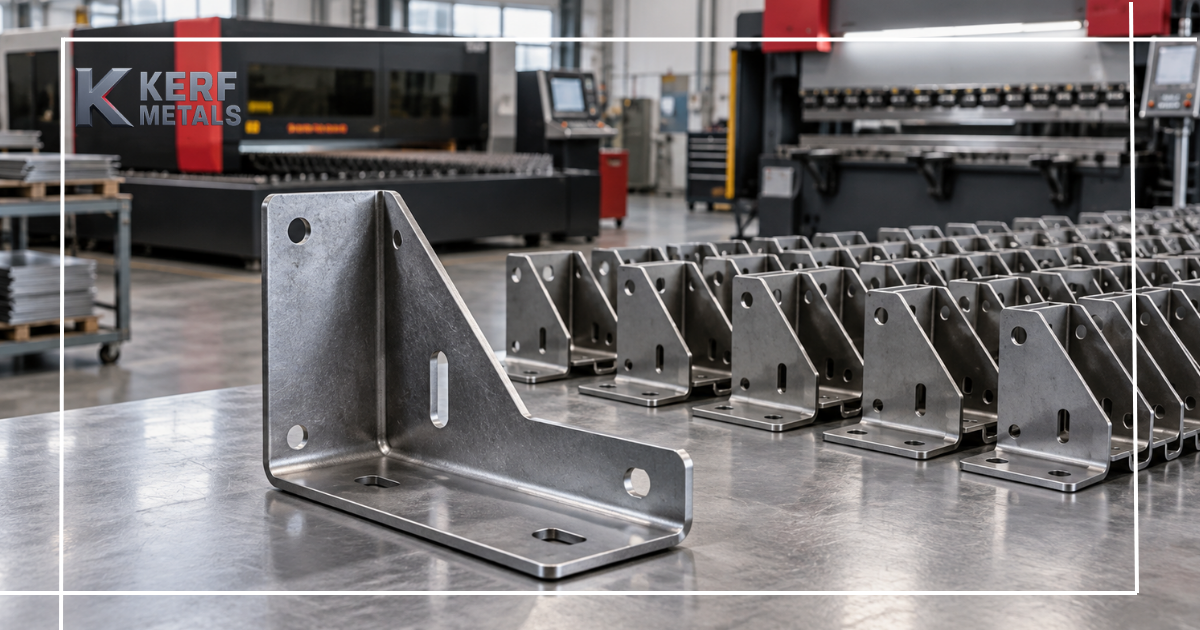
Ask whether the supplier has the equipment and processes needed to produce the same component consistently in future batches.
Repeatability becomes particularly important when laser-cut parts must move into bending, rolling, welding, assembly, or another downstream operation.
The Best Quote Is the One That Reduces Total Project Risk
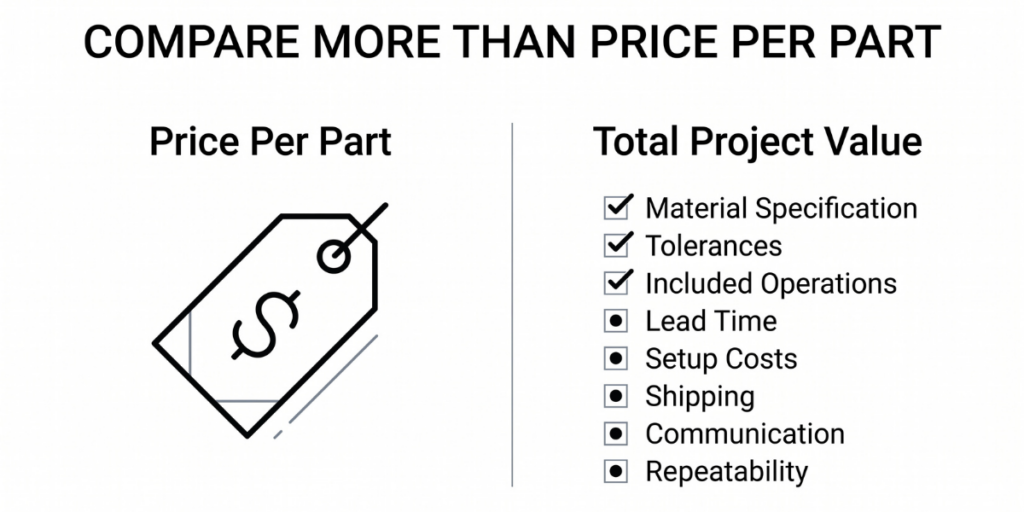
Price per part should always be part of the decision, but it should not be the only factor.
A strong metal fabrication quote combines competitive pricing with clearly defined materials, realistic tolerances, reliable lead times, included processing operations, and consistent production.
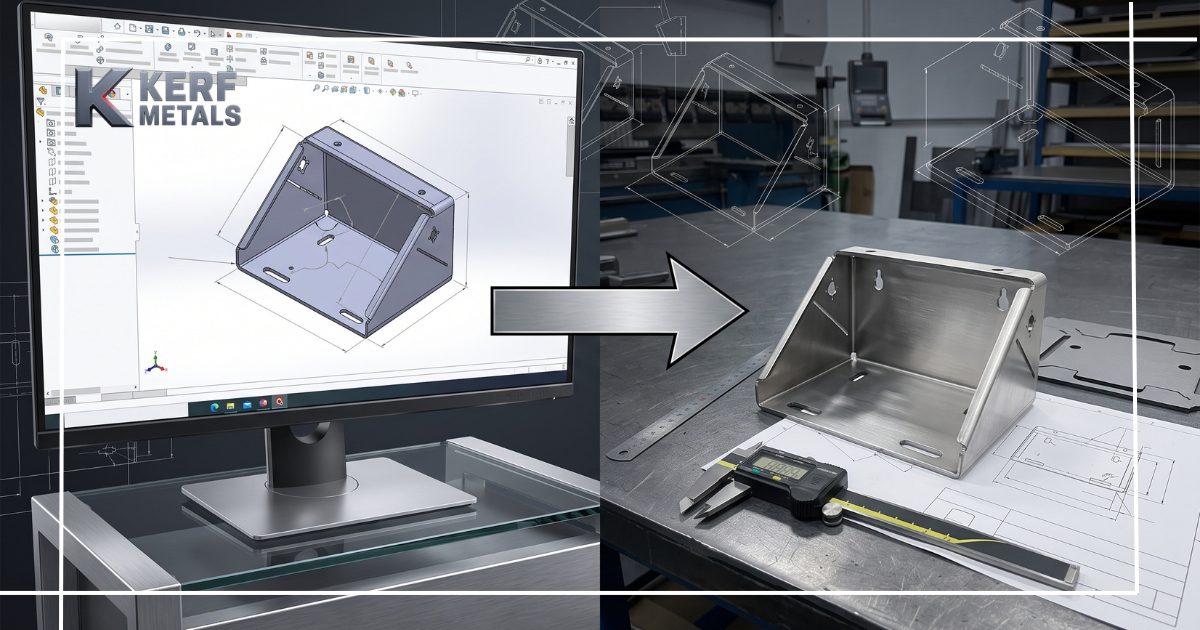
Kerf Metals provides precision laser cutting, metal bending, and metal rolling services for manufacturers, OEMs, contractors, and industrial companies. By combining multiple metal processing operations within one workflow, projects can move from CAD files to production-ready parts with fewer vendor handoffs.
If you are preparing a new project, send your drawings, DXF, STEP, PDF, or other CAD files to Kerf Metals to receive a quote based on your actual specifications.