Why Reducing Waste Begins Long Before Recycling
The idea of zero waste has become increasingly popular in recent years. Most discussions focus on consumer habits such as reducing plastic use, reusing products, and recycling more effectively. However, the core principle behind zero waste applies just as strongly to manufacturing.
The most effective way to reduce waste is not to manage it better after it is created. The most effective way is to prevent waste from being created in the first place.
In manufacturing, that prevention starts on the shop floor.
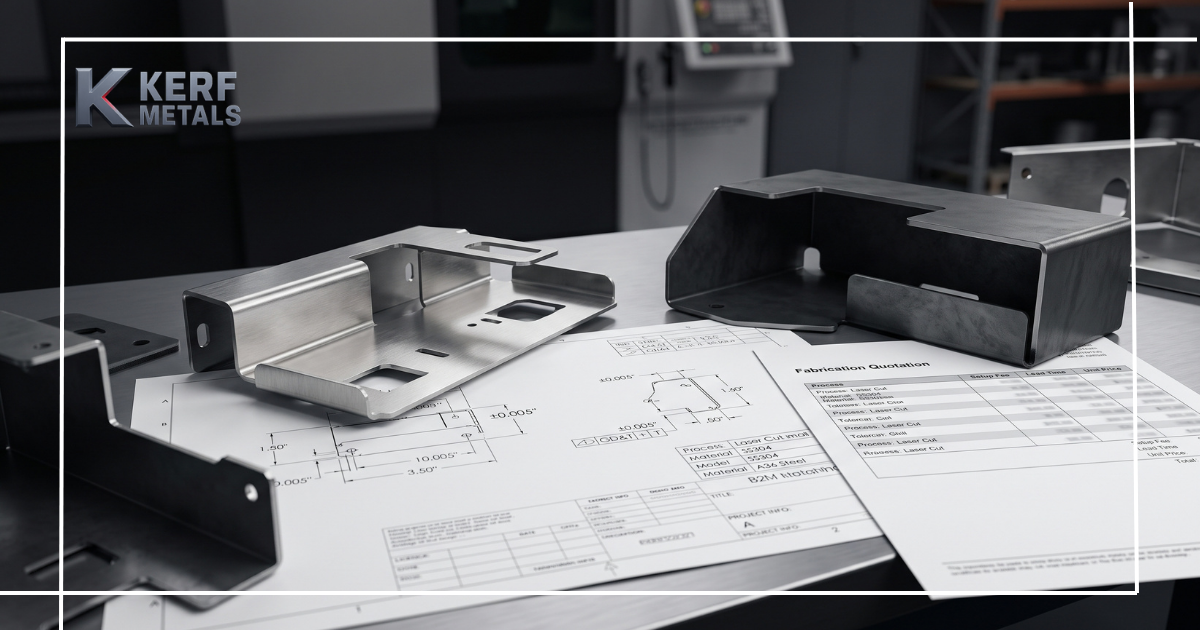
For companies that rely on metal components, precision cutting plays a critical role in determining how much material is used, how much is discarded, and how efficiently a project moves from design to production.
At Kerf Metals, we believe that zero waste manufacturing starts with smarter metal cutting.
The Problem With Waste in Manufacturing
Manufacturing waste comes in many forms.
Excess raw material, defective parts, rework, inefficient nesting, unnecessary transportation, excessive energy consumption, and production errors all contribute to waste throughout the supply chain.
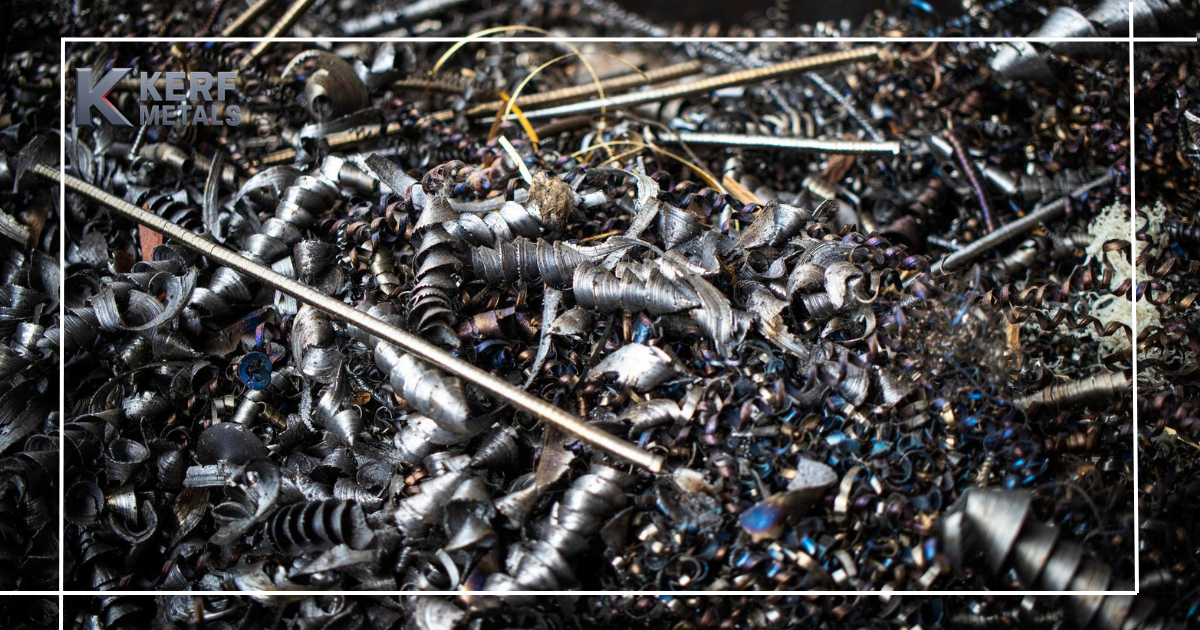
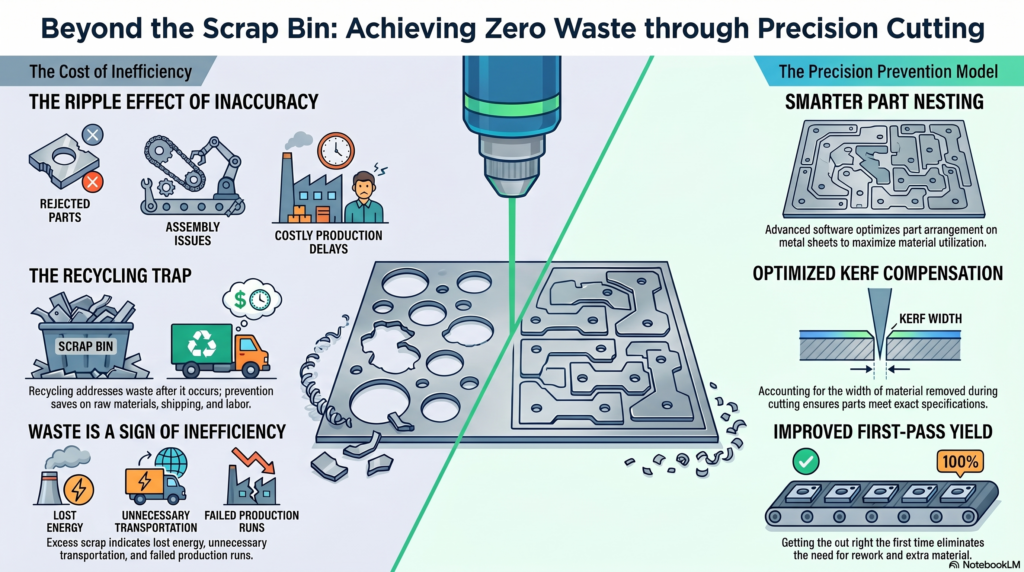
Many businesses focus on recycling scrap metal after production. While recycling is valuable, it addresses waste after it has already occurred.
A truly sustainable manufacturing strategy focuses on waste prevention.
Every pound of material that never turns into scrap saves on raw materials, shipping, labor, and environmental impact.
This approach aligns with modern zero waste thinking: reduce first, then reuse and recycle what remains.
Precision Matters More Than Ever
One of the biggest sources of material waste in metal fabrication is inaccurate cutting.
Even small dimensional errors can lead to:
- Rejected parts
- Assembly issues
- Production delays
- Increased material consumption
When these mistakes are multiplied across hundreds or thousands of parts, the cost becomes significant.
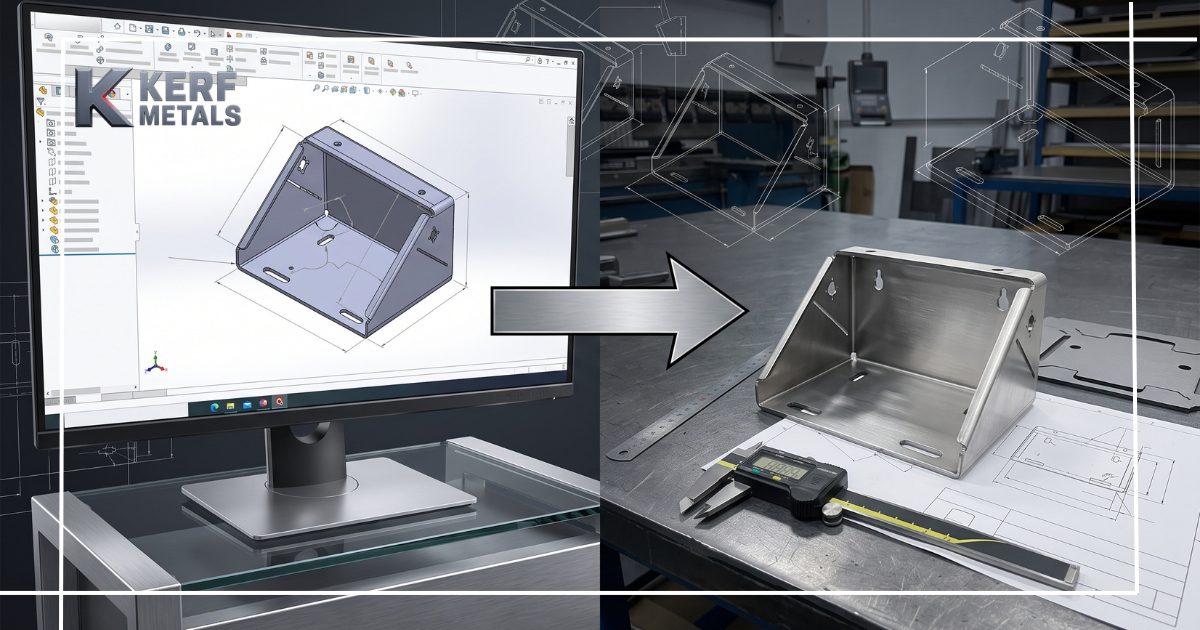
Precision laser cutting dramatically reduces these risks by producing highly accurate parts from the first run.
Modern laser cutting technology allows manufacturers to achieve tight tolerances while minimizing material removal and maximizing usable sheet area.
The result is less waste, fewer errors, and greater production efficiency.
Smarter Nesting Creates Immediate Material Savings
One of the most overlooked opportunities for waste reduction is part nesting.
Nesting refers to the arrangement of parts on a metal sheet before cutting begins.
Poor nesting can leave large sections of usable material unused. Smart nesting strategies maximize
sheet utilization and reduce the amount of scrap generated during production.
Advanced nesting software allows parts to be positioned in ways that optimize material usage while maintaining cutting efficiency.
For manufacturers using steel, stainless steel, or aluminum, even small nesting improvements can lead to major savings over time.
The less material required to produce the same number of parts, the closer a manufacturing operation moves toward true resource efficiency.
Understanding Kerf Helps Reduce Waste
The term “kerf” refers to the width of material removed during the cutting process.
While the kerf may seem insignificant, it directly affects material consumption and part accuracy.
A poorly controlled kerf can lead to dimensional inaccuracies, excessive material loss, and increased scrap rates.
Professional laser cutting operations account for kerf during programming and production planning, ensuring that final parts meet pecifications while minimizing unnecessary material removal.
At Kerf Metals, kerf compensation is part of every precision cutting project because accuracy and sustainability go hand in hand.
When every cut is optimized, less material is wasted.
Sustainable Manufacturing Is About Efficiency
Many companies mistakenly assume sustainability requires major investments or dramatic operational changes.
In reality, some of the most effective sustainability improvements come from increasing efficiency.
Improving first-pass yield.
Optimizing material usage.
Eliminating rework.
Reducing transportation through better production planning.
These operational improvements benefit both the environment and the bottom line. The most successful manufacturers understand that waste is often a sign of inefficiency.
By removing inefficiencies, usinesses naturally reduce their environmental impact while improving profitability.
A Practical Approach to Zero Waste Manufacturing
One important lesson from the modern zero waste movement is that perfection is not the goal.
Many sustainability experts now emphasize progress over perfection.
The same principle applies to manufacturing.
Achieving absolute zero waste may not always be realistic. However, continuously reducing waste
throughout the production process creates meaningful improvements over time.
Companies can begin by asking simple questions:
- Are we maximizing material utilization?
- Are our parts being cut accurately the first time?
- Can we reduce scrap generation?
- Are we minimizing rework?
- Are we using manufacturing partners that prioritize efficiency?
Small improvements in each area can produce substantial long-term results.
The Role of Laser Cutting in a Circular Economy
As industries shift to greener production, precision laser cutting is becoming a key part of the solution.
Laser cutting supports circular manufacturing principles by:
- Reducing material waste
- Improving resource efficiency
- Producing accurate parts that require less rework
- Maximizing raw material utilization
- Supporting lean manufacturing initiatives
When fewer resources are consumed to produce the same result, both manufacturers and the environment benefit.
Why Manufacturers Choose Kerf Metals
At Kerf Metals, we help companies reduce waste before it starts.
Our precision laser cutting services are designed to maximize material efficiency, improve production accuracy, and support smarter manufacturing practices.
We work with businesses that need reliable metal processing. We help reduce excessive scrap, inconsistent quality, and repeated production runs.
Whether you need laser cutting, metal bending, or metal rolling, our focus stays the same. We help manufacturers get better results and waste fewer resources.
The Future of Manufacturing Is Smarter, Not Bigger
The future of sustainable manufacturing will not be defined by how much material companies consume.
It will be defined by how efficiently they use it.
Zero waste manufacturing is not simply about recycling more metal. It is about designing better processes, making smarter production decisions, and preventing waste before it occurs.
That journey starts with precision.
And precision starts with smarter metal cutting.
If your business wants to boost efficiency, cut material waste, and improve production accuracy, Kerf Metals can help.