
Why Professional Steel Cutting Saves Money Despite Kerf Loss
Every steel cutting project comes with one unavoidable reality: some material disappears during the cut. That narrow strip of missing metal has a name — kerf — and for a lot of buyers, it sounds like straight-up waste.
Technically, it is. But here’s what actually matters: kerf loss isn’t what drives up the cost of a project. Poorly managed kerf is.
When steel gets cut without proper planning, programming, and downstream process knowledge, those tiny losses compound fast. Parts come out undersized. Holes drift off-center. Bend lines miss. Rolled components won’t fit the intended radius. A job that looked affordable on paper can quietly become expensive through scrap, rework, delays, and extra handling — and by the time you realize it, the steel’s already been cut.
That’s the core reason why working with a professional steel cutting shop saves you money, even knowing that kerf loss is part of the deal.
At Kerf Metals in Middlesex, New Jersey, we focus on the work that directly affects part accuracy and production efficiency: laser cutting, metal bending, and metal rolling. Our goal isn’t just to cut steel. It’s to make sure the parts you receive are cleaner, more predictable, and ready to move straight into the next stage of your production.
What Is Kerf in Steel Cutting?
Kerf is the width of material removed when a cutting tool passes through steel.
In laser cutting specifically, a concentrated beam melts or vaporizes a narrow line of metal. That line has a measurable width. If it’s not accounted for in the cutting program, the finished part won’t match the intended dimensions — even if everything else on the job went perfectly.
Consider this: a bracket designed to be exactly 10 inches wide can end up slightly short if the cutting path isn’t properly compensated. The same problem can ripple through slots, holes, tabs, panels, and any component that needs to mate with another part during assembly.
Kerf itself is small. But in professional manufacturing, a small dimensional error at the cutting stage can turn into a large, expensive problem by the time it reaches assembly.
Why Kerf Loss Isn’t the Real Cost Problem
The actual cost problem isn’t the thin line of steel removed by the laser. It’s what happens when that line gets ignored or guessed at.
A poorly planned cutting job can create:
- Parts that don’t fit during assembly
- Extra grinding or edge cleanup before parts can be used
- Wasted sheet area that could have yielded additional parts
- Delays between cutting, bending, and rolling stages
- Added labor hours correcting avoidable mistakes
- More shipping between separate vendors who don’t coordinate
- Missed deadlines for contractors, manufacturers, and project managers
Professional steel cutting changes the economics of a job at the source. A serious shop looks beyond the cutting path — it considers the material, thickness, part geometry, bend requirements, rolling tolerances, and how each piece will be used when it gets to your facility. That planning upfront is what keeps costs from ballooning later.

Laser Cutting Reduces Waste Through Precision
Laser cutting is one of the most material-efficient methods available when accuracy, repeatability, and edge quality matter.
Because a laser produces a narrow kerf, more of each sheet becomes usable parts. That’s real money when you’re working with steel, stainless steel, or aluminum — materials where per-pound costs add up quickly on any volume order.
Professional laser cutting also reduces the secondary work that comes after the cut. Clean edges mean less time spent grinding, correcting, or preparing parts before they move to the next operation. For manufacturers and contractors, that directly translates to lower labor costs and faster turnaround.
This matters particularly for businesses throughout New Jersey who need parts that arrive production-ready — not parts that require an hour of cleanup before they can be used.
Better Nesting Means Better Material Yield
One of the most significant cost advantages of working with a professional cutting partner is nesting – and it’s one buyers rarely think to ask about.
Nesting is the process of arranging parts on a sheet in the most efficient layout possible. Good nesting minimizes the unused space between parts and squeezes more value out of every sheet you’re paying for.
Here’s the difference in practice: a low-cost cutting provider may simply run the file as you sent it. A professional cutting partner thinks about how the parts sit together on the sheet, whether grain direction will affect how something bends, where cutouts belong relative to other features, and how to reduce scrap before the first cut is ever made.
Even a modest improvement in sheet utilization creates meaningful savings across repeated orders. Saving material on one sheet is helpful. Saving material across 50 or 200 sheets is a serious competitive advantage on a production run.
Cutting, Bending, and Rolling Shouldn’t Be Treated as Separate Jobs
Most steel parts aren’t finished the moment they leave the cutting table. They still need to be bent, formed, or rolled – and that’s where a lot of hidden costs show up.
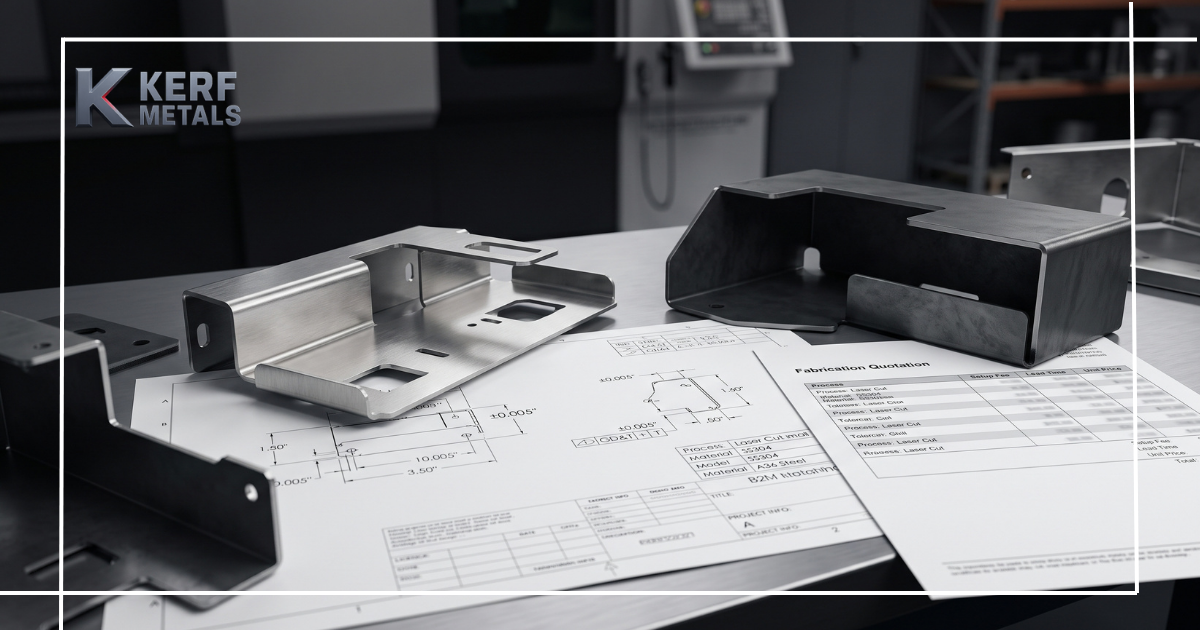
A part can be cut perfectly as a flat shape and still fail the moment it hits the brake press. If bend allowance is wrong in the flat pattern, the final formed component won’t hit the required dimensions. Holes too close to a bend line may distort during forming. Sharp internal corners can create stress concentrations. Rolled components often require different planning than flat panels or brackets – planning that has to happen before the cut, not after.
This is exactly why Kerf Metals keeps laser cutting, metal bending, and metal rolling under one roof and one conversation.
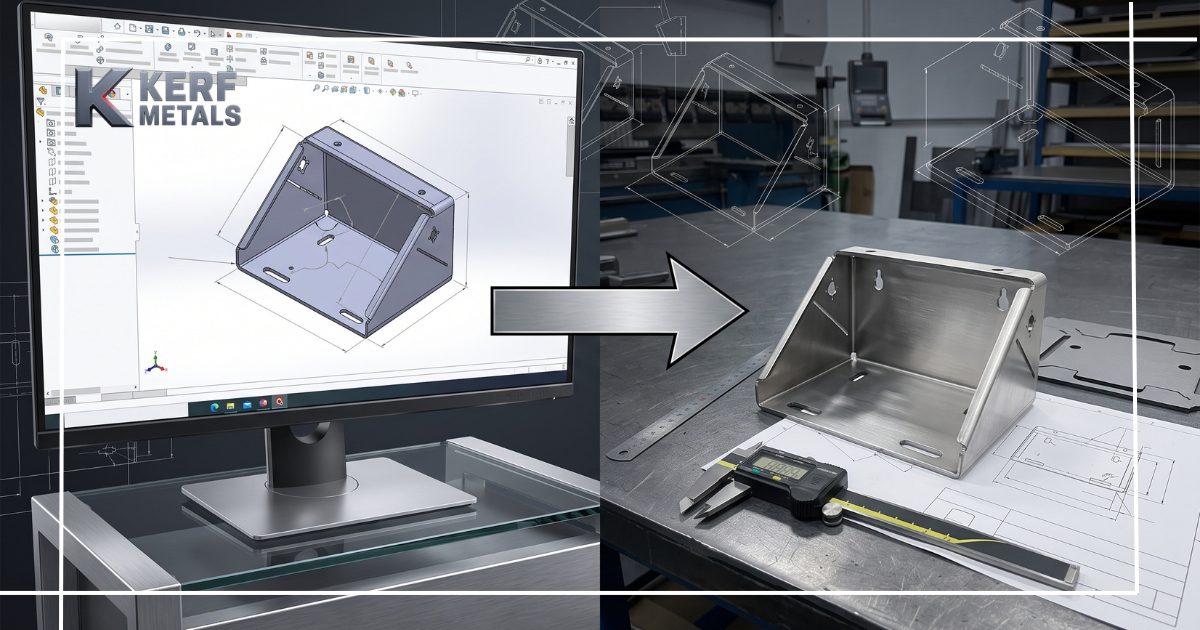
When these services are planned together, the project gets more predictable at every step. The flat pattern gets reviewed with the bend sequence in mind. The cutting strategy supports what’s coming next on the floor. Rolling requirements get factored in before the part is ever programmed. That kind of integrated planning reduces the chance of discovering a design problem after the steel is already cut – which is almost always the most expensive time to find one.
The Cheapest Quote Is Rarely the Lowest Total Cost
It’s tempting to choose the lowest cutting quote. Anyone managing a budget would consider it.
But the cheapest quote only reflects one number in a longer chain. If parts arrive with rough edges, wrong dimensions, poor hole alignment, or geometry that won’t form correctly, the real cost shows up elsewhere. In extra labor. In delays. In replacement material. In lost production time while your crew waits for parts that should have been right the first time.
In steel processing, the quote is just the entry point. The real question is: what does the part actually cost by the time it’s ready to use?
Professional steel cutting controls that final number by reducing avoidable errors from the very beginning of the job.
Local Steel Cutting in New Jersey Reduces Logistical Friction
For businesses across New Jersey and the surrounding region, working with a nearby metal processing partner creates advantages that go beyond the parts themselves.
Every time a part moves between separate vendors, you add time, communication risk, shipping cost, and accountability gaps. One shop cuts it. Another bends it. A third rolls it. When something goes wrong, tracking down where the problem started becomes its own project.
Kerf Metals simplifies that chain by handling laser cutting, metal bending, and metal rolling from one facility in Middlesex, NJ. You’re not just saving transit time. You’re giving your project a clearer production path — one team, one point of contact, one place to go when you need to talk through a design question or get a job turned around quickly.
Professional Steel Cutting Supports Smarter Design Decisions
Good steel cutting isn’t just about machine capability. It’s about understanding how design choices affect what a job actually costs in production.
Working with a professional team gives you the ability to catch issues before they become material losses. Common design-stage problems that add cost include:
- Features placed too close to bend lines
- Cutouts that may distort during forming operations
- Tolerances tighter than necessary, adding cost without adding function
- Part layouts that waste sheet material without a clear reason
- Shapes that could be nested more efficiently with minor modifications
- Geometry that will create challenges in rolling or bending that aren’t obvious on a flat drawing
These details can seem minor at the design stage. By the time a job is running, though, they’re often the difference between a project that flows cleanly and one that keeps stopping for corrections.
When design intent and production experience work together from the start, steel cutting becomes more than a service. It becomes a tool for controlling total project cost.
Kerf Loss Is Normal. Uncontrolled Waste Isn’t.
Every cutting method removes some material. That’s not a problem to solve — it’s a reality to manage.
With professional laser cutting, accurate programming, smart nesting, and planning that accounts for bending and rolling from the start, kerf becomes a controlled variable instead of a source of unexpected cost. The difference between simply cutting steel and producing parts that make financial sense often comes down to that level of planning.
Work With Kerf Metals for Steel Cutting in New Jersey
If your project needs accurate steel parts, clean edges, repeatable dimensions, and reliable support through forming, Kerf Metals is ready to help.
We provide:
- Laser cutting for clean, precise steel and metal components
- Metal bending for accurate angles, flanges, and formed parts
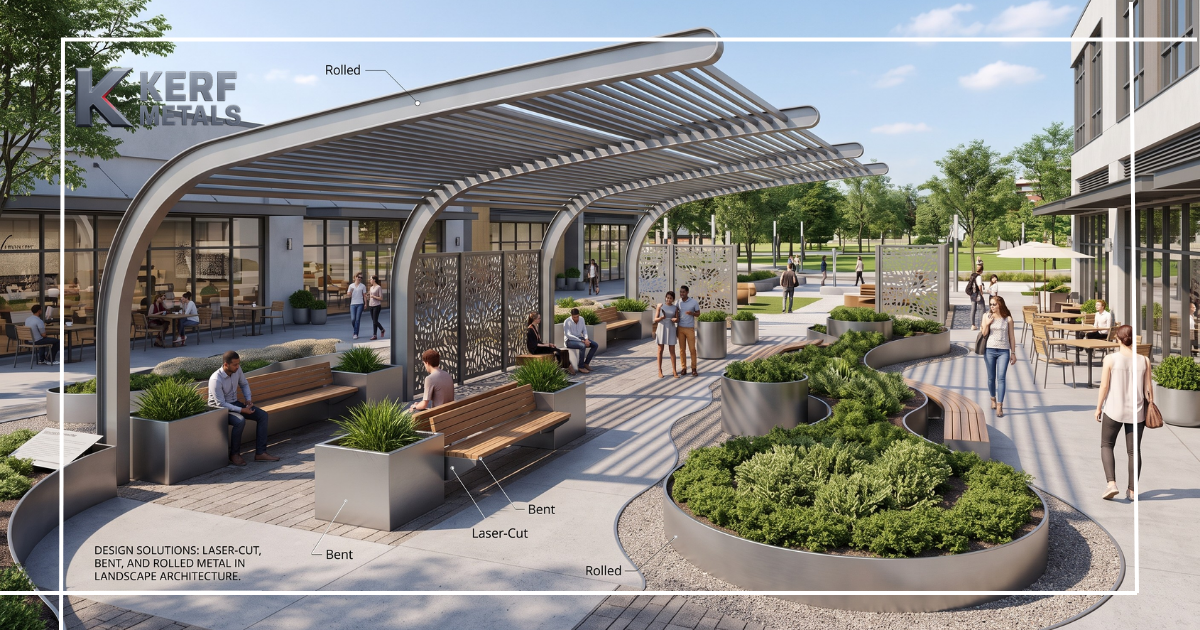
- Metal rolling for curved profiles and radius-based components
From one-off prototypes to ongoing production runs, our focus stays the same: help businesses reduce waste, avoid rework, and keep their projects moving.
Kerf loss is part of cutting. Wasted money doesn’t have to be.
Contact Kerf Metals in Middlesex, New Jersey to request a quote for laser cutting, metal bending, or metal rolling.